
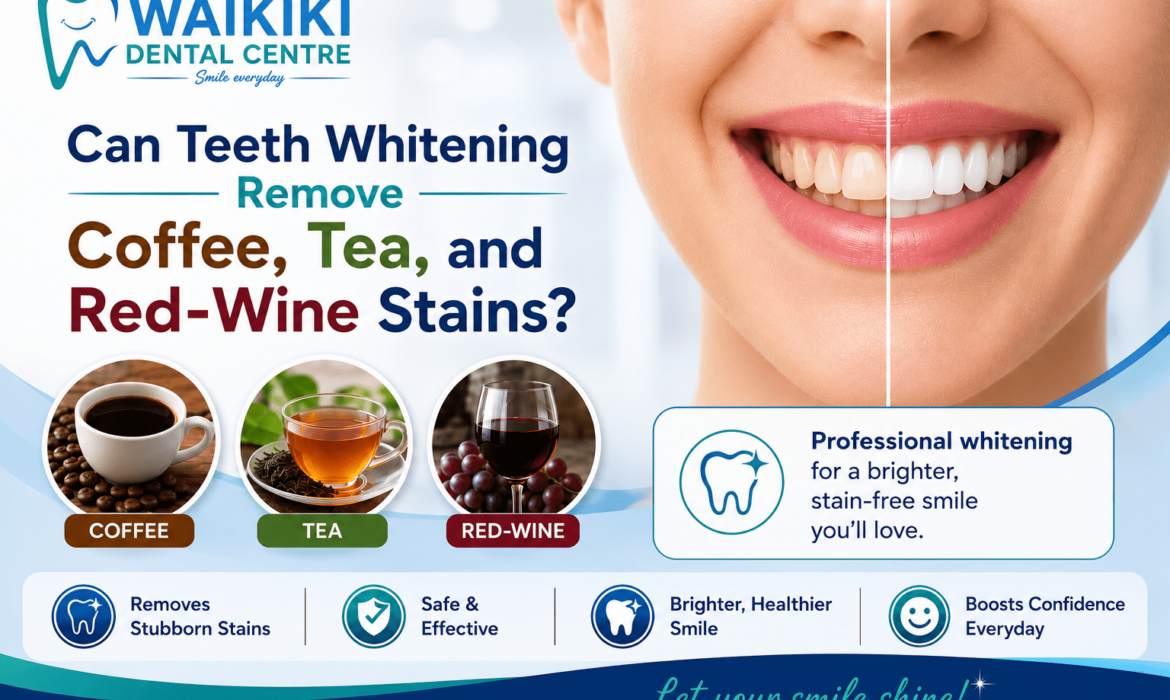
Can Teeth Whitening Remove Coffee, Tea, and Red-Wine Stains?
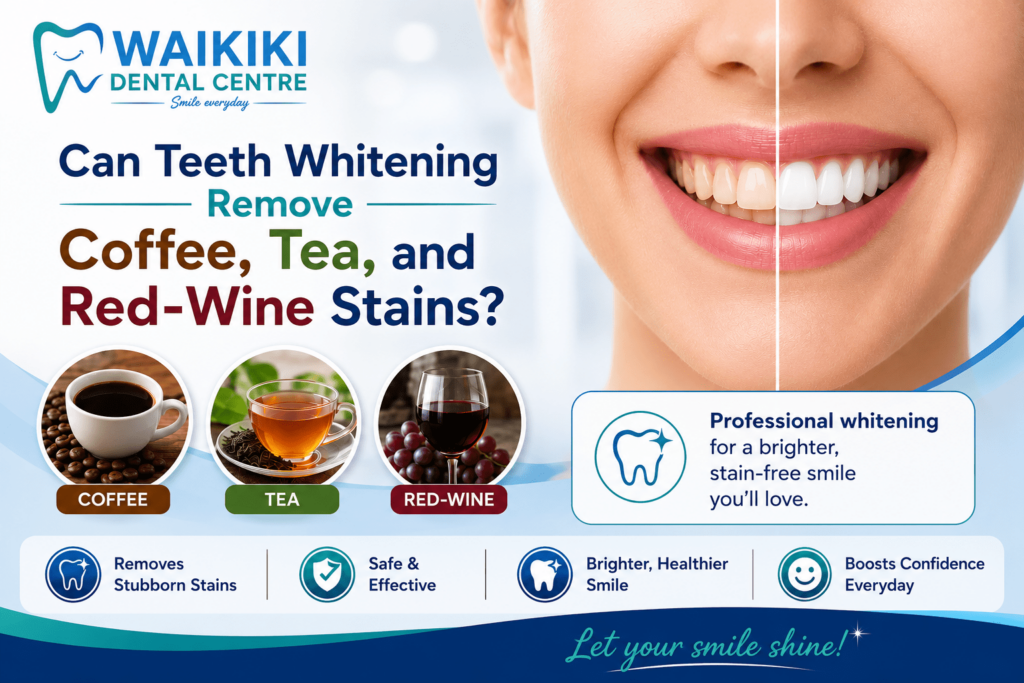
Coffee, tea, and red wine are among the most common beverages associated with tooth discoloration. Their dark pigments and staining compounds can gradually build up on the tooth surface, making a once-bright smile appear dull or yellow. The good news is that professional teeth whitening can significantly reduce many beverage-related stains and help restore a brighter appearance.
At Waikiki Dental Centre, we provide personalized whitening care designed around each patient’s dental condition, existing discoloration, sensitivity concerns, and desired results. Before recommending whitening, we assess the teeth and gums to determine whether professional whitening, teeth cleaning, or another cosmetic treatment is the most appropriate option.
Why Do Coffee, Tea, and Red Wine Stain Teeth?
Coffee, tea, and red wine contain compounds known as chromogens and tannins. Chromogens are strongly pigmented compounds that can contribute to discoloration, while tannins can make it easier for these pigments to adhere to the tooth surface.
Acidic beverages can also temporarily affect the outer enamel surface. When combined with frequent exposure to dark pigments, this may contribute to more noticeable staining over time. The longer these stains remain untreated, the more difficult they may become to address with simple brushing alone.
The extent of discoloration varies from person to person. Enamel characteristics, oral hygiene habits, frequency of beverage consumption, tobacco use, age, and previous dental treatments can all influence how quickly stains become visible.
Coffee Stains on Teeth
Coffee contains dark pigments and tannins that can attach to the enamel surface. Drinking coffee frequently gives the teeth repeated exposure to these compounds, allowing discoloration to gradually become more noticeable.
People who drink several cups throughout the day may experience staining more quickly than those who consume coffee occasionally. Adding sugar or other ingredients does not necessarily prevent staining, because the pigmentation in the beverage can still contact the teeth.
For mild surface discoloration, regular brushing and professional dental cleaning may improve the appearance. More persistent discoloration may respond better to teeth whitening for coffee stains, particularly when the staining has affected the overall shade of the teeth.
Tea Stains on Teeth
Tea can also cause noticeable tooth discoloration. Black tea is particularly associated with staining because of its concentration of tannins and dark pigments, although other varieties can contribute to discoloration as well.
Some people are surprised to learn that tea may cause substantial staining despite being perceived as a lighter beverage. Frequent consumption can expose teeth repeatedly to compounds that adhere to enamel.
When discoloration is primarily on the outer surface, professional cleaning can remove some of the buildup. For stains that remain after cleaning, teeth whitening for tea stains may provide a more significant improvement.
Red Wine Stains on Teeth
Red wine can stain teeth because it combines several factors associated with discoloration. It contains dark chromogens and tannins, while its acidity can affect the tooth surface.
The combination can make red wine particularly noticeable on a bright smile. Drinking red wine regularly may result in progressive surface staining, especially when oral hygiene and professional dental cleaning are inconsistent.
Teeth whitening for red wine stains can often reduce this type of discoloration when the stains are suitable for whitening. However, whitening cannot guarantee complete removal of every type of discoloration.
Can Teeth Whitening Remove Coffee, Tea and Red-Wine Stains?
In many cases, yes, professional teeth whitening can significantly reduce or remove stains caused by coffee, tea, and red wine.
The result depends largely on whether the discoloration is extrinsic or intrinsic. Extrinsic stains occur primarily on the outer surface of the teeth and are commonly associated with foods, beverages, tobacco, and plaque. These stains often respond well to professional cleaning and whitening.
Intrinsic discoloration occurs deeper within the tooth structure. It can develop because of aging, certain medications, dental trauma, developmental factors, or changes within the tooth itself. Intrinsic stains may be more difficult to treat with conventional whitening.
This is why we recommend an examination before whitening. A dental professional can determine the likely source of discoloration and establish realistic expectations for treatment.
How Professional Teeth Whitening Works
Professional whitening uses a peroxide-based whitening agent to help break down compounds responsible for tooth discoloration. During treatment, the whitening agent interacts with stain molecules and helps make them less visible.
Breaking Down Stain Molecules
The whitening process allows the active ingredients to work within the tooth structure. Oxygen released from the whitening agent interacts with pigmented compounds, helping break them down without physically scraping away the enamel.
The exact treatment approach depends on the patient’s needs. A professional assessment helps determine the appropriate concentration, application method, and treatment schedule.
The Best Option for Beverage Stains
Professional whitening can be particularly useful when discoloration is associated with frequent consumption of:
- Coffee
- Black tea
- Green tea
- Red wine
- Dark-colored soft drinks
- Certain deeply pigmented foods
For patients seeking teeth whitening treatment in Rockingham, we can assess the existing shade and determine whether professional whitening is appropriate.
What Is the Best Way to Remove Coffee Stains from Teeth?
If you want to remove coffee stains from teeth, the best approach usually combines consistent oral hygiene with professional dental care.
1. Brush Regularly
Brushing twice daily with fluoride toothpaste helps control plaque and reduce the accumulation of surface discoloration. Gentle brushing is important because aggressive brushing can irritate the gums and contribute to enamel wear.
2. Floss Daily
Flossing removes plaque and food particles from areas that a toothbrush cannot reach. Maintaining clean spaces between the teeth can help support a brighter and healthier smile.
3. Schedule Professional Cleanings
A professional cleaning can remove plaque, calculus, and some external staining that cannot be eliminated through normal brushing. Regular dental visits also allow us to identify problems before they become more complicated.
4. Consider Professional Whitening
If stains remain after cleaning, professional whitening may be appropriate. Whitening is particularly useful when the primary concern is the overall shade of the teeth rather than heavy plaque or calculus buildup.
5. Reduce Frequent Exposure
Reducing how often teeth are exposed to staining beverages can help maintain whitening results. Drinking water afterward can also help rinse away some remaining beverage residue.
Professional Whitening vs. Over-the-Counter Products
Professional whitening offers dentist-guided care, stronger treatment options, and personalized results, while over-the-counter products provide a more general approach with slower, less customized outcomes.
| Professional Whitening | Store-Bought Products |
| Stronger, professionally selected whitening agents | Generally milder formulations |
| Can provide faster visible improvement | Often requires longer, repeated use |
| Treatment can be tailored to individual needs | Usually designed as a one-size-fits-all option |
| Dental assessment before treatment | Generally used without professional supervision |
| Professional guidance for sensitivity and suitability | Limited personalization |
| Can be combined with other dental care | Primarily focused on cosmetic whitening |
Over-the-counter whitening products can be useful for some people, but professional treatment provides greater control over the treatment process. A dental assessment is especially important when discoloration is significant or when sensitivity, decay, cracks, or gum problems are present.
How Long Do Whitening Results Last?
Whitening results are not permanent. The duration depends on individual habits, oral hygiene, diet, age, and how frequently staining beverages are consumed.
Regular coffee, tea, and red wine consumption can gradually introduce new discoloration. However, maintaining good oral hygiene and attending routine dental appointments can help preserve the appearance of a brighter smile.
Some patients may benefit from occasional professional maintenance or dentist-recommended touch-ups. We can recommend a maintenance approach based on the patient’s original shade, whitening response, and lifestyle.
Can Teeth Cleaning Help with Stains?
Teeth cleaning and teeth whitening are different treatments.
Professional cleaning focuses on removing plaque, calculus, and certain types of surface staining. It can make teeth look cleaner and brighter without actually changing their natural internal shade.
Whitening, on the other hand, is designed to lighten the color of the teeth by breaking down discoloration compounds.
For patients considering teeth cleaning in Waikiki, professional cleaning may be the appropriate first step when discoloration is associated with plaque, calculus, or surface stains. Once the teeth have been cleaned, we can determine whether additional whitening would improve the overall appearance.
When Should You See a Dentist?
Not every change in tooth color is simply a cosmetic concern. Persistent discoloration should be evaluated when it affects one tooth significantly, develops suddenly, or occurs alongside pain or sensitivity.
We recommend speaking with a dentist in Rockingham when you experience:
- Persistent or unusual tooth discoloration
- Significant sensitivity to hot or cold drinks
- Pain while eating or drinking
- Toothache
- Cracks or visible damage
- Bleeding or swollen gums
- Signs of decay
- Discoloration that does not improve after cleaning
If pain or sensitivity is present, whitening should not automatically be the first treatment. An evaluation may identify an underlying dental issue requiring toothache treatment or another restorative procedure.
Why Choose Waikiki Dental Centre for Teeth Whitening?
At Waikiki Dental Centre, we take a personalized approach to cosmetic dental care. Rather than treating every case of discoloration in exactly the same way, we consider the condition of the teeth, existing dental work, gum health, sensitivity, and the patient’s cosmetic goals.
Our approach can include:
- Comprehensive dental assessment
- Evaluation of the cause of discoloration
- Professional whitening options
- Personalized treatment planning
- Guidance for maintaining whitening results
- Preventive dental care
- Recommendations for additional cosmetic treatments when appropriate
Patients looking for a teeth whitening dentist in Rockingham can receive professional guidance about whether whitening is suitable for their individual smile.
Other Dental Treatments That May Be Recommended
Whitening is not always the only solution for discoloration. In some cases, combining treatments can produce a more comprehensive cosmetic improvement.
A professional cleaning may be recommended before whitening to remove plaque, calculus, and surface stains. This creates a cleaner foundation for evaluating the natural tooth shade.
For severe intrinsic discoloration that does not respond adequately to whitening, cosmetic options such as veneers may be considered. Veneers can alter the visible appearance of teeth when carefully selected and appropriately planned.
If discoloration is accompanied by pain, sensitivity, decay, or structural damage, we may recommend addressing the underlying dental problem before beginning cosmetic treatment.
Interesting Read: Family Dentist vs General Dentist: Which One Is Right for You?
Conclusion: Can Teeth Whitening Remove Beverage Stains?
Professional teeth whitening can be highly effective for reducing coffee, tea, and red-wine stains, particularly when discoloration is primarily located on the surface of the teeth. However, the result depends on the type, severity, and cause of the staining.
Regular brushing, flossing, professional cleaning, and sensible beverage habits can help prevent new stains from developing. When discoloration persists, professional whitening provides a controlled approach to achieving a brighter smile.
If you are concerned about coffee, tea, or red-wine discoloration, we recommend arranging a professional dental assessment rather than relying solely on home remedies. Waikiki Dental Centre can evaluate your smile, discuss your cosmetic goals, and recommend an appropriate whitening or dental treatment plan.
Book a consultation with Waikiki Dental Centre today to discover whether professional teeth whitening is right for your smile.FAQs About Teeth Whitening for Coffee, Tea and Red-Wine Stains
FAQs About Teeth Whitening for Coffee, Tea and Red-Wine Stains
Can teeth whitening remove coffee stains completely?
Professional whitening can significantly reduce many coffee stains, particularly when the discoloration is primarily superficial. Complete removal cannot be guaranteed because some stains may be deeper or related to changes within the tooth.
Does tea stain teeth more than coffee?
Both coffee and tea can stain teeth. Black tea contains tannins and pigments that can contribute significantly to discoloration, while the degree of staining depends on consumption frequency, oral hygiene, and individual enamel characteristics.
Will red wine stains come back after whitening?
New staining can develop after whitening if teeth are regularly exposed to red wine and other pigmented foods or beverages. Good oral hygiene, professional cleanings, and appropriate maintenance can help prolong whitening results.
How many whitening sessions will I need?
The number of sessions depends on the starting tooth shade, type of discoloration, whitening method, and desired result. Some patients achieve noticeable improvement with one treatment, while others may need additional treatment or maintenance.
Is professional whitening safe for sensitive teeth?
Professional whitening can be suitable for many people with sensitive teeth, but sensitivity should be discussed before treatment. We can assess the teeth and recommend an approach designed to minimize unnecessary discomfort.
Can I drink coffee after a whitening treatment?
It is generally advisable to limit strongly pigmented foods and beverages immediately after whitening, following the specific instructions provided by the dental professional. Reducing coffee and similar beverages can also help maintain results over time.