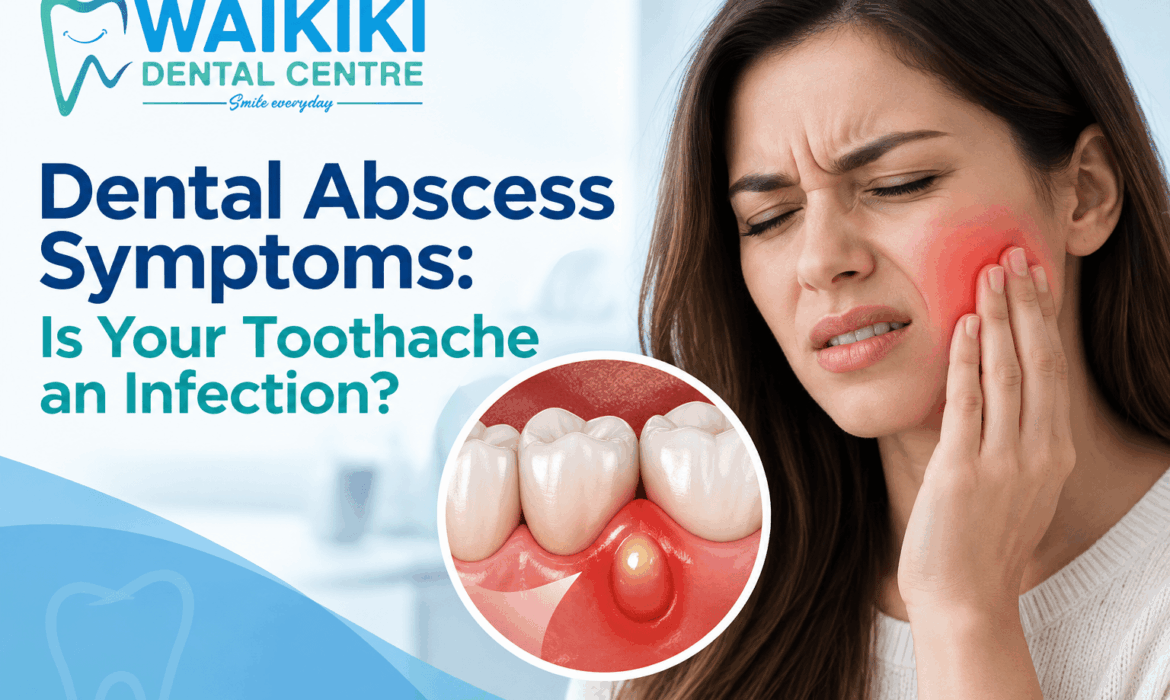
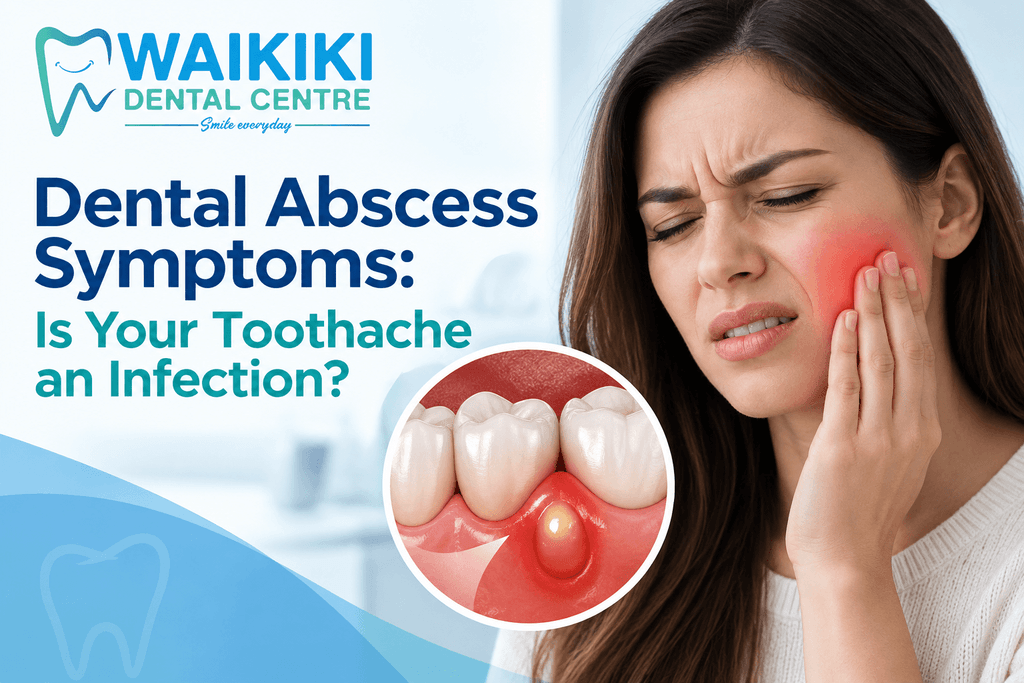
Dental Abscess Symptoms: Is Your Toothache an Infection?
A toothache can be caused by several dental problems, but persistent or worsening pain may sometimes be a sign of an infection. Recognizing common dental abscess symptoms can help you seek treatment before the infection becomes more serious.
A dental abscess may cause severe tooth pain, swelling, sensitivity, a bad taste, or discomfort when chewing. In some cases, it can also lead to fever or facial swelling. Understanding the connection between tooth pain and infection can help you know when it is time to contact a dentist.
This guide explains the signs of a dental abscess, common causes, treatment options, and when to seek urgent dental care from Waikiki Dental.
What is a Dental Abscess?
A Professional Tooth Abscess Treatment is a localized collection of pus that develops when bacteria infect the tooth, gums, or tissues surrounding the tooth. The infection can occur when bacteria gain access to the inner part of a tooth through untreated decay, a crack, trauma, or other damage.
Two common types are periapical abscesses and periodontal abscesses.
A periapical abscess develops around the tip of a tooth’s root. It commonly occurs when bacteria reach the pulp, the soft tissue containing nerves and blood vessels inside the tooth. Deep decay or significant damage can allow bacteria to reach this area.
A periodontal abscess develops in the gum and supporting tissues surrounding a tooth. It may be associated with gum disease, a deep periodontal pocket, or bacteria becoming trapped around the tooth.
An untreated abscess can continue to affect surrounding tissues. The infection may cause increasing swelling and pain and, in more serious circumstances, can spread beyond the immediate area. For this reason, suspected infection should be professionally assessed rather than monitored indefinitely at home.
Common Dental Abscess Symptoms to Watch For
Recognizing the common warning signs can help us distinguish a potentially infected tooth from ordinary temporary sensitivity. Dental abscess symptoms can vary depending on the location and severity of the infection, but several signs deserve prompt attention.
1. Persistent or Severe Toothache
A toothache that continues rather than settling can indicate inflammation or infection. Pain may become increasingly uncomfortable and interfere with eating, sleeping, or normal daily activities.
2. Throbbing Tooth Pain
An infected tooth may cause a deep, throbbing sensation. The discomfort can sometimes feel stronger when lying down or when pressure is placed on the affected tooth.
3. Sensitivity to Hot or Cold
Sensitivity can occur for several reasons, including enamel wear, exposed dentine, decay, or inflammation of the dental pulp. When sensitivity becomes prolonged or occurs alongside other symptoms, an examination can help identify the underlying cause.
4. Pain When Biting or Chewing
Pain when biting down may occur when inflammation affects the tissues surrounding a tooth. It can also result from a cracked tooth or other dental conditions, so professional diagnosis is important.
5. Swollen Gums
Localized gum swelling near a painful tooth can be an important warning sign. The area may appear red, tender, or noticeably different from the surrounding gum tissue.
6. Facial or Jaw Swelling
Swelling around the cheek, jaw, or face can occur when an infection extends beyond the immediate tooth area. Increasing facial swelling requires prompt dental assessment.
7. A Pimple or Bump on the Gums
A small bump resembling a pimple may develop on the gum when an infection creates a pathway for drainage. Although pressure may temporarily decrease after drainage, this does not necessarily mean the underlying infection has disappeared.
8. Bad Taste or Pus in the Mouth
A sudden unpleasant taste, particularly when accompanied by fluid or pus around the affected tooth, can indicate an infection. This symptom should not be ignored even if the pain temporarily improves.
9. Fever or Feeling Generally Unwell
Fever, fatigue, or feeling unwell may indicate that the body is responding to infection. These symptoms are particularly important when they occur with significant dental pain or swelling.
10. Swollen Lymph Nodes
Infections in the mouth can sometimes cause nearby lymph nodes to become tender or swollen. This can occur alongside other signs of infection and warrants professional evaluation.
How Can You Tell If a Toothache Is an Infection?
Not every toothache is caused by an infection. Temporary sensitivity may occur after consuming something particularly hot or cold and may disappear quickly. However, persistent pain, increasing discomfort, swelling, or pain that occurs without an obvious trigger may require closer attention.
Tooth pain and infection are more concerning when several symptoms appear together. For example, tooth pain accompanied by facial swelling, a gum bump, pus, fever, or a bad taste is more suggestive of an infection than isolated sensitivity.
Pain that becomes progressively worse or continues for an extended period should also be assessed. However, symptoms alone cannot establish a definitive diagnosis. A dentist may examine the tooth, gums, bite, and surrounding tissues and may use dental imaging when necessary.
What Causes a Dental Abscess?
A dental abscess usually develops when bacteria gain access to tissues where they can multiply and cause infection. Several dental problems can create this opportunity.
1. Untreated Tooth Decay
Deep tooth decay can progress through the enamel and dentine until it reaches the pulp. Once bacteria enter the inner tissues, inflammation and infection can develop.
2. Cracked or Damaged Teeth
A crack can create a pathway for bacteria to enter deeper areas of a tooth. Depending on the location and extent of the damage, the tooth may become painful or infected.
3. Dental Trauma
An injury can damage the tooth’s internal tissues even when the outside of the tooth does not appear severely damaged. Dental trauma may eventually contribute to pulp problems and infection.
4. Gum Disease
Advanced gum disease can create deeper spaces around teeth where bacteria accumulate. A periodontal infection can sometimes result in an abscess within these supporting tissues.
5. Previous Dental Treatment Complications
A previously treated tooth can occasionally develop further problems. A dentist may need to investigate the tooth and surrounding tissues to determine why symptoms have returned.
6. Bacteria Entering the Tooth’s Inner Tissues
When the protective outer layers of a tooth are compromised, bacteria may reach the pulp. If the infection progresses, an abscess can form around the root or surrounding tissues.
Can a Dental Abscess Go Away on Its Own?
A dental abscess should not be considered cured simply because the pain becomes less intense. In some cases, an abscess can drain, reducing pressure and creating temporary relief. The source of the infection, however, may remain.
Without appropriate treatment, infection can continue affecting the tooth and surrounding tissues. Delaying care may also make the dental problem more complicated to manage.
Professional tooth infection treatment focuses on addressing the source of the infection. Depending on the circumstances, this may involve drainage, root canal treatment, extraction, or other dental care.
Antibiotics may be prescribed in certain situations, particularly when there are signs that infection is spreading or systemic involvement is present. However, antibiotics do not generally eliminate the source of an infected tooth by themselves. The underlying dental problem still needs appropriate treatment.
How is a Dental Abscess Treated?
The appropriate dental abscess treatment depends on the location of the infection, the condition of the tooth, and the extent of the problem. A dentist will assess the tooth and surrounding tissues before recommending treatment.
1. Draining the Abscess
When appropriate, drainage can help remove accumulated pus and reduce pressure. The dentist determines the safest method based on the location of the infection.
2. Root Canal Treatment
When an infected tooth can be restored, root canal treatment may be used to remove infected or damaged pulp tissue. The canals are then cleaned, disinfected, and sealed before the tooth is restored.
3. Tooth Extraction
If a tooth is severely damaged or cannot be predictably restored, tooth extraction may be necessary. Removing the affected tooth eliminates the source when preservation is not possible.
4. Antibiotics When Clinically Appropriate
Antibiotics may form part of treatment when clinically indicated. They are generally used alongside appropriate dental treatment rather than as a replacement for addressing the infected tooth or tissues.
5. Follow-Up Dental Care
Follow-up is important to confirm that treatment has addressed the underlying problem. Depending on the treatment provided, further restoration or ongoing dental care may be required.
When Should You See an Emergency Dentist?
Some symptoms require urgent professional attention. We should seek Emergency Dental Care when dental pain is accompanied by significant swelling, systemic symptoms, or signs that the infection may be spreading.
An emergency dentist should assess situations involving:
- Rapidly increasing facial or oral swelling
- Severe or worsening tooth pain
- Fever associated with dental symptoms
- Difficulty swallowing
- Difficulty breathing
- Swelling extending toward the face or neck
- Severe pain that cannot be adequately controlled
Difficulty breathing or swallowing, particularly when accompanied by significant swelling, can indicate a potentially serious situation requiring immediate medical attention.
What Can You Do Until You See a Dentist?
While home measures cannot eliminate the source of a dental abscess, several steps may provide temporary support while waiting for professional care.
- Keep the mouth and affected area clean through gentle oral hygiene.
- Rinse gently with warm salt water if comfortable.
- Avoid very hot, cold, or sugary foods if they trigger pain.
- Follow the directions for appropriate over-the-counter pain relief and avoid exceeding recommended doses.
- Do not attempt to squeeze, puncture, or drain an abscess yourself.
- Arrange professional dental care as soon as possible.
A temporary reduction in pain should not be interpreted as confirmation that the infection has resolved. Professional assessment remains important when an abscess is suspected.
Get Professional Dental Abscess Treatment at Waikiki Dental
Persistent tooth pain, swelling, gum changes, pus, a bad taste, fever, and increasing sensitivity can be important dental abscess symptoms that should not be ignored. Although some toothaches have less serious causes, symptoms associated with infection require professional assessment.
Prompt dental abscess treatment can address the underlying source of infection and may help preserve a natural tooth when appropriate. Depending on the condition, treatment may include drainage, root canal treatment, restoration, extraction, or antibiotics when clinically indicated. Patients looking for Tooth Abscess Treatment in Waikiki or Rockingham can arrange a professional dental assessment to determine the cause of their symptoms and discuss suitable treatment options.
For severe symptoms or signs of spreading infection, Emergency Dental Care should be sought without unnecessary delay.
Contact Waikiki Dental to arrange an appointment or seek urgent dental care when symptoms require prompt attention.
Frequently Asked Questions About Dental Abscesses
What are the first signs of a dental abscess?
Early signs can include persistent tooth pain, sensitivity, pain when biting, localized gum swelling, tenderness, or a pimple-like bump on the gum. A bad taste or drainage may also occur. Symptoms vary depending on the location and extent of infection.
Can a tooth abscess cause severe tooth pain?
Yes. A dental abscess can cause severe, persistent, or throbbing pain. The discomfort may become more noticeable when biting or chewing. However, the severity of pain does not always indicate the extent of infection, so dental assessment is important.
Can a dental abscess spread to other parts of the body?
An untreated dental infection can spread beyond the original tooth and surrounding tissues. Significant swelling, fever, difficulty swallowing, or difficulty breathing can indicate a more serious infection and require urgent professional assessment.
Does every dental abscess require tooth extraction?
No. Extraction is not automatically required. When a tooth has sufficient healthy structure and can be restored, root canal treatment may allow the natural tooth to be retained. The appropriate option depends on the condition of the tooth and surrounding tissues.
How is a dental abscess diagnosed?
A dentist generally evaluates the symptoms, examines the tooth and surrounding tissues, and assesses tenderness or changes around the affected area. Dental X-rays or other imaging may be used when necessary to identify the source and extent of the problem.
Can antibiotics cure a tooth abscess?
Antibiotics can be appropriate in certain situations, particularly when there are signs of spreading infection or systemic involvement. However, they do not usually remove the underlying source of an infected tooth. Dental treatment may still be necessary.
When should I visit an emergency dentist for tooth pain?
Urgent assessment is appropriate when tooth pain is severe or worsening, particularly when accompanied by swelling or fever. Difficulty swallowing or breathing and swelling involving the face or neck require particularly urgent attention.
How quickly should a dental abscess be treated?
A suspected dental abscess should be assessed promptly rather than left untreated. Early professional evaluation allows the underlying cause to be identified and appropriate Tooth Abscess Treatment to be planned.
5 Myths About Children’s Oral Health Debunked by a Kids Dentist
Children’s oral health begins with the first tooth and continues to develop throughout childhood. Healthy teeth and gums support comfortable eating, clear speech, normal development, and positive daily habits. Yet several common misconceptions can lead parents to overlook important aspects of kids’ dental care and children’s dental health.
Some parents believe baby teeth do not require extensive care because they eventually fall out. Others assume that a child only needs to visit the dentist after experiencing tooth pain or once permanent teeth begin appearing. These misunderstandings can delay preventive care and allow dental concerns to become more complicated.
Working with a kids dentist allows parents to understand age-appropriate oral care and recognise potential concerns early. At Waikiki Dental Centre, we encourage families to take a preventive approach to dental health so children can develop habits that support healthy smiles as they grow.
Why Children’s Oral Health Matters From an Early Age
Early children’s dental health affects much more than the appearance of a child’s smile. Baby teeth help children bite and chew food, contribute to speech development, and maintain space for developing permanent teeth. When primary teeth are affected by decay or other problems, children may experience discomfort that interferes with eating, sleeping, concentration, and everyday activities.
Good child dental care also helps establish routines that can continue into adolescence and adulthood. Teaching children to brush regularly, make sensible food choices, and become comfortable with dental examinations can make oral hygiene a normal part of everyday life.
Regular dental appointments provide another important layer of protection. Preventive pediatric dental care allows dental professionals to monitor teeth and gums, identify developing concerns, reinforce home-care techniques, and provide appropriate advice as a child’s mouth changes.
Myth 1: Baby Teeth Don’t Need Much Dental Care
Baby teeth play an important role in childhood development, so caring for them properly helps protect comfort, support healthy habits, and prepare children for their permanent teeth.
Debunking the Myth
It is easy to underestimate baby teeth because they are temporary. However, temporary does not mean unimportant. Primary teeth have important functions during the years when children are learning to eat, speak, and develop their permanent dentition.
Tooth decay can develop in baby teeth just as it can in permanent teeth. A cavity may cause sensitivity, discomfort, difficulty eating, or infection if it progresses. Losing a primary tooth prematurely because of severe decay can also affect the normal development of a child’s mouth and may create complications with spacing.
Effective children’s teeth care should begin as soon as the first tooth appears. Parents can gently clean young teeth with an appropriate toothbrush and use fluoride toothpaste in the amount recommended for the child’s age. As children become more independent, they can participate in brushing while parents continue supervising and assisting as needed.
A child’s first dental visit should not be postponed until there is a problem. Early assessment allows families to receive personalized guidance about brushing, diet, fluoride exposure, and developing oral health.
Myth 2: Children Don’t Need to See a Dentist Until Their Permanent Teeth Come In
Children benefit from dental care before permanent teeth appear, as early examinations can monitor development, encourage prevention, and establish positive dental habits from a young age.
Debunking the Myth
Permanent teeth are not a prerequisite for dental care. Children benefit from professional examinations while they still have their primary teeth.
An early dental visit gives a kids’ dentist an opportunity to assess the child’s teeth and gums, identify signs of decay, monitor oral development, and discuss preventive measures with parents. It also helps children become familiar with the dental environment before an urgent problem develops.
Establishing a dental home early can make future appointments more comfortable and predictable. Instead of introducing dental care during an emergency, children can gradually become accustomed to routine examinations and professional guidance.
A children’s dentist can also help parents understand how oral-care needs change as children grow. Advice that is appropriate for a toddler may differ from recommendations for a school-aged child or teenager. Regular pediatric dental care therefore supports both prevention and ongoing monitoring.
Myth 3: Cavities in Baby Teeth Don’t Really Matter
Cavities in primary teeth can affect comfort, eating, sleep, and daily activities, making early prevention and professional care important for maintaining healthy children’s dental health.
Debunking the Myth
Cavities in primary teeth should never be dismissed simply because those teeth will eventually be replaced. Tooth decay can affect a child’s comfort and ability to eat normally, and advanced decay may require more extensive treatment.
Children may not always describe dental discomfort clearly. They might avoid certain foods, chew on one side of the mouth, become irritable, or have difficulty sleeping. In some cases, dental decay may progress without obvious symptoms until it becomes more advanced.
Preventing cavities involves several everyday habits. Regular brushing with fluoride toothpaste helps remove plaque and strengthen teeth. Limiting frequent exposure to sugary foods and drinks can reduce the conditions that contribute to tooth decay. Routine examinations allow dental professionals to identify early changes and recommend appropriate preventive measures.
Professional kids dental care works alongside daily home care. Brushing at home is essential, but regular dental examinations provide an additional opportunity to monitor oral health and address concerns before they become more difficult to manage.
Myth 4: Kids Don’t Need to Brush Their Teeth Properly Until They’re Older
Children need proper tooth brushing from an early age, with parents providing supervision and assistance to remove plaque effectively and establish consistent oral hygiene routines.
Debunking the Myth
Children should begin cleaning their teeth as soon as teeth emerge. Waiting until a child is older can allow plaque to accumulate during an important stage of dental development.
Young children often lack the coordination required to brush every surface effectively. Parents should therefore supervise brushing and provide assistance when necessary. As children develop better manual skills, they can gradually take greater responsibility while adults continue checking their technique.
Brushing should generally take place twice a day, using an age-appropriate toothbrush and fluoride toothpaste. The toothbrush should reach the outer, inner, and chewing surfaces of the teeth. Gentle brushing along the gumline is also important.
Practical children’s teeth care can become easier when parents make brushing part of an established morning and bedtime routine. Choosing a suitable toothbrush, using the recommended amount of fluoride toothpaste, and replacing the toothbrush when the bristles become worn can all support effective oral hygiene.
Parents should also remember that good oral health involves more than brushing. Diet, regular dental examinations, fluoride exposure, and consistent habits all contribute to healthy teeth and gums.
Myth 5: A Child Only Needs a Dentist When They Have Tooth Pain
Routine dental visits are essential even when children have no pain, helping identify hidden concerns, provide preventive care, and maintain healthy teeth and gums over time.
Debunking the Myth
Dental appointments are not only for treating pain. One of the most valuable purposes of routine dental care is prevention.
Some oral health problems may develop without causing noticeable symptoms during their early stages. Regular examinations can help identify changes involving teeth, gums, bite development, or other aspects of oral health before they become more significant.
Professional cleaning may also help remove plaque or deposits that are difficult to manage through ordinary brushing alone. Depending on a child’s individual needs, a dental professional can provide guidance on oral hygiene, diet, fluoride, and other preventive measures.
Routine pediatric oral health care also creates opportunities for early intervention. Addressing a developing concern promptly can often be simpler than waiting until symptoms become severe.
What Does Good Children’s Oral Health Look Like?
Healthy kids’ oral health involves regular brushing, healthy gums, sensible eating habits, routine dental appointments, and early attention to concerns that could affect developing teeth.
Healthy kids’ oral health is supported by several consistent habits rather than one isolated practice. Parents can look for:
- Regular brushing twice a day
- Clean teeth without persistent plaque buildup
- Healthy-looking gums without ongoing swelling or bleeding
- Limited sugary snacks and drinks
- A balanced, tooth-friendly diet
- Regular dental appointments
- Consistent age-appropriate oral hygiene habits
- Early professional attention when concerns arise
Children will naturally have different oral health needs at different ages. Maintaining consistent routines and attending regular dental examinations gives families a practical foundation for long-term children’s dental health.
When Should Your Child Visit a Kids Dentist?
Dental care should begin early rather than waiting until permanent teeth have appeared. Many dental organisations recommend that a child have their first dental visit by their first birthday or within six months of the first tooth appearing.
After the initial appointment, the appropriate frequency of check-ups depends on the child’s individual oral health needs and the recommendations of the dental professional. Regular visits allow the development of the teeth and gums to be monitored over time.
An earlier appointment may be appropriate if a child has tooth pain, visible cavities, swelling, bleeding gums, dental trauma, persistent sensitivity, difficulty chewing, or another noticeable change in oral health.
Regular visits can also help children build confidence around dental care. Familiarity with examinations and a consistent preventive routine can support positive attitudes toward oral health throughout childhood.
Choosing the Right Dentist for Your Child
When choosing a kid’s dentist in Waikiki families can rely on, parents should consider whether the practice provides a welcoming environment and communicates appropriately with children. A positive dental experience can help children feel more comfortable during examinations and future appointments.
Parents searching for kids dentistry Waikiki may also consider the practice’s approach to preventive care, general dental services, communication, appointment convenience, and experience caring for younger patients.
For families in the surrounding area, choosing a children’s dentist who understands the needs of growing children can make ongoing dental care easier to manage. Families looking for a kids dentist in Rockingham can similarly consider whether the practice offers family-focused care and supports preventive dental habits.
Kids dentistry in Rockingham should ideally form part of a long-term approach rather than being limited to emergency treatment. A practice offering family dentistry can provide continuity as children move through different stages of dental treatments.
Interesting Read: Family Dentist vs General Dentist: Which One is Right for You
How Waikiki Dental Centre Supports Children’s Dental Health
Waikiki Dental Centre takes a family-focused approach to dental care, with an emphasis on maintaining oral health and addressing concerns appropriately.
For children, preventive care begins with establishing good everyday habits and attending regular examinations. Dental appointments can provide parents with useful guidance about brushing, dietary habits, dental development, and concerns that may require further attention.
Routine examinations also provide an opportunity to monitor changes over time. As children grow, their dental needs can change, making ongoing professional assessment an important part of maintaining good children’s oral health.
Families can discuss their child’s individual needs with the dental team and receive advice appropriate to their circumstances rather than relying on common assumptions about children’s teeth.
Simple Kids Dental Care Tips for Parents
Simple daily routines can make a meaningful difference to children’s oral health, from twice-daily brushing and healthy eating to regular dental examinations and early professional advice.
Parents can support their child’s oral health with a straightforward daily routine:
- Brush twice daily. Make morning and bedtime brushing consistent.
- Supervise younger children’s brushing. Help children clean areas they may miss.
- Use age-appropriate fluoride toothpaste. Follow dental guidance regarding the appropriate amount.
- Limit frequent sugary foods and drinks. Frequent sugar exposure can increase the risk of tooth decay.
- Encourage healthy eating habits. A balanced diet supports overall and oral health.
- Schedule regular dental examinations. Preventive appointments help identify concerns early.
- Do not wait for tooth pain. Contact a dental professional when you notice a concern rather than waiting for symptoms to become severe.
Give Your Child a Healthy Start With Good Oral Care
The five myths about children’s oral health can lead parents to delay important care. Baby teeth matter, children should receive dental attention before all their permanent teeth appear, cavities should not be ignored, proper brushing should begin early, and dental visits should not be reserved for emergencies.
Consistent kids’ dental care at home combined with regular professional examinations gives children a strong foundation for lifelong oral health. Small habits established during childhood can become natural routines that continue well into adulthood.
At Waikiki Dental Centre, our Rockingham dentist welcomes families seeking practical guidance and ongoing dental care. If you have questions about your child’s teeth, brushing routine, dental development, or an oral health concern, arranging an appointment with our dentist can help you understand the next appropriate step and support your child’s healthy smile.
Frequently Asked Questions About Children’s Oral Health
When should a child first visit a dentist?
A child’s first dental visit is recommended early in life, commonly by their first birthday or within six months of the first tooth appearing. Early visits allow dental professionals to provide preventive guidance and monitor development.
How often should children visit a dentist?
The appropriate interval depends on the child’s oral health, age, risk factors, and individual needs. Regular examinations allow a dentist to monitor changes and recommend an appropriate appointment schedule.
Are baby teeth really important if they eventually fall out?
Yes. Baby teeth help children eat and speak comfortably and maintain space while permanent teeth develop. Decay or premature loss can cause discomfort and may affect normal dental development.
How can parents prevent cavities in children?
Parents can reduce cavity risk by helping children brush twice daily with fluoride toothpaste, limiting frequent sugary foods and drinks, encouraging healthy eating habits, and maintaining regular dental examinations.
Should parents help children brush their teeth?
Yes. Younger children often need assistance because they have not yet developed the coordination needed to clean every tooth surface effectively. Parents should supervise and help until the child can brush thoroughly.
What are the signs of poor children’s oral health?
Possible warning signs include tooth pain, visible decay, persistent bad breath, swollen or bleeding gums, sensitivity, difficulty chewing, changes in eating habits, or discomfort when brushing.
When should I take my child to a kids dentist?
Arrange a dental appointment if your child has pain, swelling, visible tooth damage, suspected decay, dental trauma, persistent sensitivity, or another oral health concern. Routine visits are also important even when no symptoms are present.
What is the difference between a kids dentist and a general dentist?
A dentist providing care for children should understand the specific needs of growing patients, including preventive care, communication, developing teeth, and age-appropriate oral hygiene. The most suitable provider depends on the child’s individual needs and the services available at the practice.
How Often Should You Visit the Dentist During Invisalign Treatment?
Regular dental visits are an essential part of successful Invisalign treatment. Although clear aligners are removable and designed to be changed according to a prescribed schedule, Invisalign treatment involves carefully planned tooth movement that needs professional monitoring. At Waikiki Dental Centre, we understand that achieving a healthy, functional, and attractive smile involves more than simply wearing a series of aligners at home.
For most patients, Invisalign dental checkups are scheduled approximately every 6–8 weeks, although the exact interval depends on the individual treatment plan. During these appointments, we monitor tooth movement, assess aligner fit, check the condition of the teeth and gums, and determine whether any adjustments are necessary.
For patients considering Invisalign in Rockingham, regular professional supervision can help ensure that treatment progresses as planned while maintaining good oral health throughout the process.
How Often Should You Visit a Dentist During Invisalign Treatment?
Most Invisalign patients typically attend dental appointments every 6–8 weeks during active treatment. However, there is no single schedule that applies to everyone. We determine appointment frequency according to the complexity of the case, the planned tooth movements, the patient’s oral health, aligner progress, and overall treatment objectives.
Patients with relatively straightforward alignment concerns may require fewer interventions, while more complex cases may require closer monitoring. We may also recommend an earlier appointment if a patient experiences an issue with an aligner, attachment, tooth movement, or oral health.
Following the recommended appointment schedule allows us to compare actual tooth movement with the planned progression. It also gives us an opportunity to identify concerns before they interfere significantly with treatment.
Consistent dentist visits during Invisalign treatment are therefore an important part of maintaining predictable progress and protecting the health of the teeth and gums.
What Happens During Invisalign Dentist Appointments?
An Invisalign appointment is generally focused on reviewing treatment progress and confirming that the teeth are responding appropriately to the planned sequence of aligners.
1. Reviewing Tooth Movement and Treatment Progress
We examine how the teeth have moved since the previous appointment and compare their current position with the expected treatment progression. This helps us determine whether the aligners are producing the intended movements.
If progress is slower or different from what was anticipated, we can assess the possible reasons and determine whether modifications are needed.
2. Checking Aligner Fit
Proper aligner fit is important because clear aligners must apply controlled pressure to specific areas of the teeth. We check whether the current aligners are fitting correctly and whether they are seating fully over the teeth.
Small gaps between the aligner and tooth can sometimes indicate that a tooth has not moved as expected. Identifying this early allows us to determine whether additional instructions or treatment adjustments are appropriate.
3. Evaluating Teeth and Gums
We also examine the condition of the teeth and gums. Wearing aligners for much of the day can make oral hygiene particularly important because plaque and food particles can become trapped against the teeth if brushing and flossing are inadequate.
During an Invisalign checkup, we look for signs of plaque accumulation, gum irritation, inflammation, cavities, or other oral health concerns that may require attention.
4. Answering Questions and Addressing Concerns
Regular appointments provide an opportunity to discuss discomfort, difficulty wearing aligners, changes in bite, problems with attachments, or questions about changing from one aligner to the next.
We can also reinforce instructions concerning aligner wear, cleaning, oral hygiene, and treatment progression.
5. Providing New Aligners or Adjusting Treatment
Depending on the treatment plan, patients may receive additional aligners or instructions for continuing to the next stage of treatment. If teeth are not tracking as expected, we may need to modify the treatment approach or consider additional scans and refinements.
Why Are Regular Invisalign Dental Checkups Important?
Regular appointments provide more than a simple progress update. They allow us to supervise both the orthodontic process and the patient’s overall oral health.
1. Monitoring Your Invisalign Treatment Progress
Every Invisalign treatment plan is based on a sequence of planned tooth movements. We monitor whether the teeth are following that sequence as expected.
While patients can see changes in their smiles at home, some aspects of tooth movement are difficult to evaluate without professional examination. Regular monitoring allows us to identify whether teeth are tracking correctly and whether the treatment remains aligned with its objectives.
2. Checking Your Oral Health
Good oral health is particularly important during Invisalign treatment. Because aligners cover the teeth for much of the day, maintaining effective brushing and flossing is essential.
We monitor for cavities, plaque buildup, gum irritation, inflammation, and other dental concerns. Detecting these issues early can help prevent them from becoming more complicated while treatment continues.
3. Identifying Treatment Issues Early
Occasionally, a tooth may not move exactly as anticipated. An attachment may become loose, an aligner may become damaged, or an aligner may stop fitting properly.
Regular checkups allow us to identify these problems early. Addressing them promptly can help reduce unnecessary interruptions and keep treatment progressing efficiently.
4. Keeping Invisalign Treatment on Track
Consistent appointments help us make informed decisions about the next stage of treatment. When patients attend scheduled visits and follow aligner-wear instructions, we can monitor progress more effectively and make appropriate adjustments when necessary.
Interesting Read: Family Dentist vs General Dentist: Which One Is Right for You?
Can You Skip Invisalign Dentist Appointments?
It is generally not advisable to skip scheduled Invisalign appointments without discussing it with your dental team. Changing aligners at home does not replace professional treatment monitoring.
If an appointment is missed, an issue with tooth movement or aligner fit may remain unnoticed for longer. Continuing through multiple aligners without addressing a tracking problem could potentially make treatment less predictable.
If you cannot attend a scheduled appointment, we recommend contacting the dental practice to discuss whether it should be rescheduled. Patients should also contact us between appointments if they experience significant discomfort, a damaged aligner, a loose attachment, or another unexpected problem.
When Should You Schedule an Extra Invisalign Appointment?
Not every Invisalign concern requires an emergency visit, but certain situations warrant contacting your dentist rather than waiting for the next routine checkup.
You may need an additional appointment if:
- You lose or damage an aligner.
- Your aligners suddenly stop fitting properly.
- You experience persistent or significant discomfort.
- Your gums become swollen, irritated, or unusually sensitive.
- You notice unexpected changes in tooth movement or your bite.
- An Invisalign attachment becomes loose or falls off.
- You experience difficulty wearing the prescribed aligner.
- You develop a dental problem unrelated to Invisalign.
If a dental problem involves severe pain, significant swelling, trauma, bleeding, or another urgent concern, contacting an emergency dentist may be appropriate rather than waiting for a routine Invisalign appointment.
Do You Still Need Regular Dental Cleanings During Invisalign?
Yes. Invisalign checkups and routine dental cleanings serve different purposes, and one does not necessarily replace the other.
An Invisalign checkup primarily focuses on treatment progression, aligner fit, tooth movement, attachments, and related concerns. A routine dental cleaning focuses on removing plaque and hardened deposits that cannot always be removed effectively through brushing and flossing alone.
Food particles and plaque can accumulate around teeth, particularly when oral hygiene is inconsistent. This makes regular brushing and flossing especially important for patients wearing clear aligners.
We recommend maintaining normal preventive dental care while undergoing Invisalign treatment. Depending on individual oral health needs, professional cleanings may be recommended at regular intervals throughout treatment.
How to Prepare for Your Invisalign Dental Checkup
A little preparation can make each appointment more useful. Before attending an Invisalign dentist appointment, patients should continue wearing their aligners according to their treatment instructions unless their dental team has advised otherwise.
Maintain your normal brushing and flossing routine, and clean your aligners according to the instructions provided. It can also be helpful to make a note of any concerns you have noticed since the previous appointment.
Consider discussing:
- Any discomfort or pressure that seems unusual
- Missed aligner-wear time
- Difficulty inserting or removing an aligner
- Problems with attachments
- Changes in your bite
- An aligner that no longer fits correctly
- Questions about changing to the next aligner
Following instructions about when to change aligners is also important. Patients should not independently accelerate or delay their treatment schedule unless advised by their dentist.
Choosing the Right Dentist for Invisalign Treatment
Selecting an Invisalign provider involves more than looking for clear aligner treatment alone. We recommend considering the overall level of dental care available throughout the treatment journey.
1. Invisalign Experience
Experience with Invisalign allows a dental team to assess alignment concerns, develop an appropriate treatment strategy, monitor progress, and identify potential tracking issues.
2. Clear Treatment Planning
Patients should understand the general objectives of treatment, expected appointments, aligner-wear requirements, and factors that may influence treatment duration.
3. Convenient Appointment Scheduling
Because Invisalign treatment requires periodic monitoring, convenient access to appointments can make it easier to maintain the recommended schedule.
4. Comprehensive Dental Care
A practice offering comprehensive services can address oral health needs that arise during treatment. This can be particularly useful when patients require preventive care, restorative dentistry, or other services alongside Invisalign.
Patients looking for an affordable dentist in Rockingham should consider overall value rather than focusing exclusively on the initial treatment cost.
Similarly, a family dentist can be a convenient option for households seeking ongoing dental care alongside orthodontic treatment.
5. Cosmetic and General Dental Expertise
Invisalign is often selected because patients want to improve the appearance of their smile. A practice that also provides cosmetic dentistry can help patients understand how alignment may relate to other aesthetic concerns and available treatment options.
Final Thoughts
Regular Invisalign dental checkups are an important part of maintaining controlled and closely monitored treatment. While clear aligners allow patients to manage much of their treatment at home, professional supervision remains necessary to assess tooth movement, aligner fit, gum health, and overall progress.
For most patients, appointments are scheduled around every 6–8 weeks, but the appropriate interval depends on the individual treatment plan. Attending appointments as recommended and communicating promptly about problems can help keep treatment progressing as intended.
At Waikiki Dental Centre, we provide Invisalign care alongside comprehensive dental services for patients in Waikiki, Rockingham, and surrounding areas. Whether you are considering Invisalign, need routine preventive care, or require additional dental treatment during your aligner journey, we can help you understand your options and plan care around your individual oral health needs.
Frequently Asked Questions About Invisalign Dentist Appointments
How often do you need to see a dentist with Invisalign?
Most Invisalign patients have appointments approximately every 6–8 weeks, although the exact schedule varies. Treatment complexity, tooth movement, oral health, aligner progress, and individual treatment goals can all influence appointment frequency.
How long does an Invisalign checkup take?
The length of an Invisalign checkup varies depending on the patient’s treatment stage and whether additional assessments are required. Many routine appointments are relatively brief, while appointments involving refinements or concerns may take longer.
Can Invisalign appointments be spaced further apart?
In some cases, appointments may be scheduled farther apart, depending on the treatment plan and the dentist’s assessment. Patients should not independently extend appointment intervals because regular monitoring helps identify issues with tooth movement and aligner fit.
What happens if I miss an Invisalign appointment?
If you miss an appointment, contact your dental practice to determine when it should be rescheduled. Avoid making independent changes to your aligner schedule unless instructed by your dental team.
Do I need dental cleanings while wearing Invisalign?
Yes. Invisalign treatment does not replace preventive dental care. Regular professional cleanings, combined with brushing and flossing, help control plaque and support healthy teeth and gums throughout treatment.
Can I see my regular dentist during Invisalign treatment?
Yes, provided your dental care is coordinated appropriately. If your Invisalign provider and regular dentist are different practices, it is useful to ensure that both are aware of your treatment and relevant dental needs.
When should I contact a dentist between Invisalign appointments?
Contact your dental team if an aligner is lost or damaged, stops fitting correctly, an attachment becomes loose, discomfort persists, gums become swollen, or you notice an unexpected change in tooth movement or your bite.
Can Teeth Whitening Remove Coffee, Tea, and Red-Wine Stains?
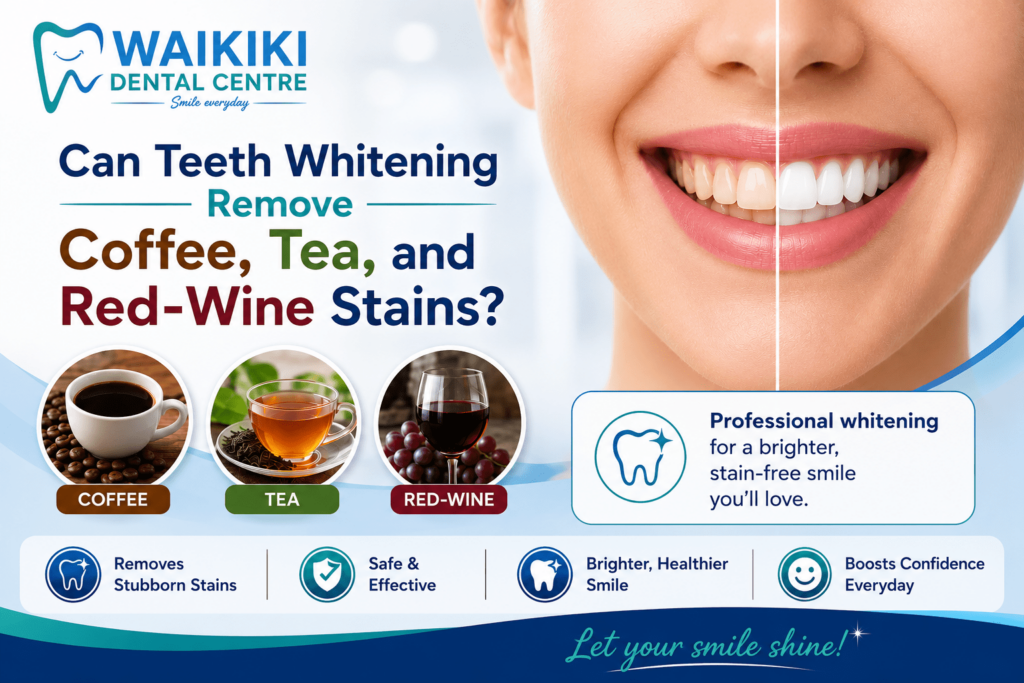
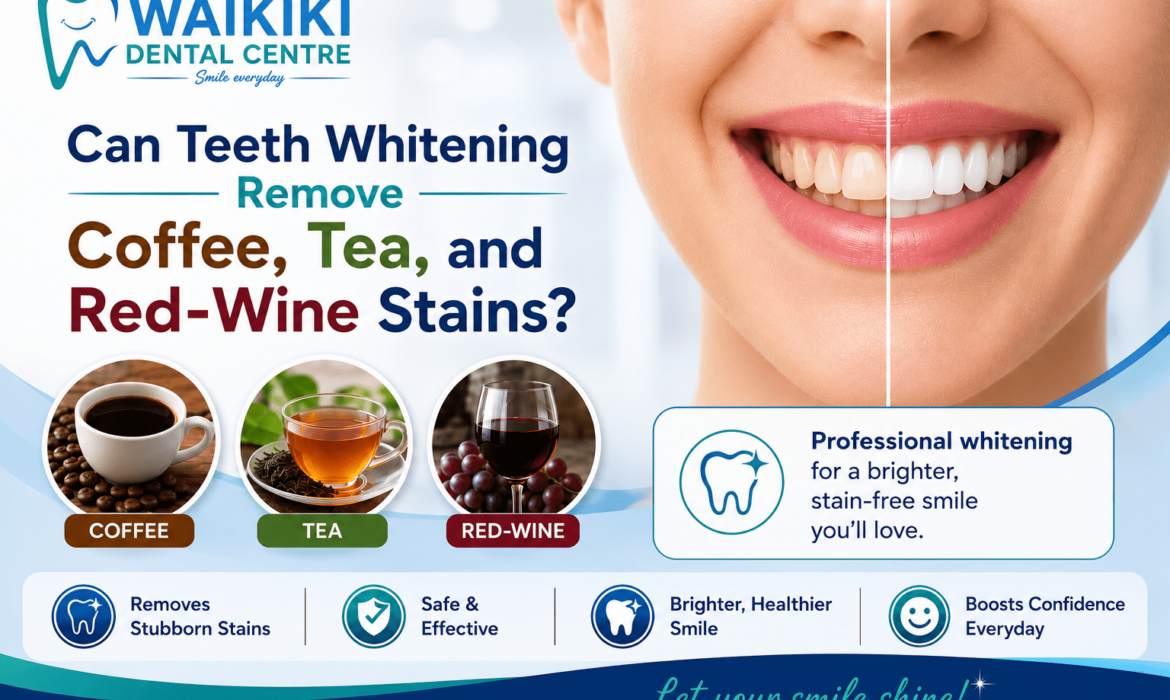
Coffee, tea, and red wine are among the most common beverages associated with tooth discoloration. Their dark pigments and staining compounds can gradually build up on the tooth surface, making a once-bright smile appear dull or yellow. The good news is that professional teeth whitening can significantly reduce many beverage-related stains and help restore a brighter appearance.
At Waikiki Dental Centre, we provide personalized whitening care designed around each patient’s dental condition, existing discoloration, sensitivity concerns, and desired results. Before recommending whitening, we assess the teeth and gums to determine whether professional whitening, teeth cleaning, or another cosmetic treatment is the most appropriate option.
Why Do Coffee, Tea, and Red Wine Stain Teeth?
Coffee, tea, and red wine contain compounds known as chromogens and tannins. Chromogens are strongly pigmented compounds that can contribute to discoloration, while tannins can make it easier for these pigments to adhere to the tooth surface.
Acidic beverages can also temporarily affect the outer enamel surface. When combined with frequent exposure to dark pigments, this may contribute to more noticeable staining over time. The longer these stains remain untreated, the more difficult they may become to address with simple brushing alone.
The extent of discoloration varies from person to person. Enamel characteristics, oral hygiene habits, frequency of beverage consumption, tobacco use, age, and previous dental treatments can all influence how quickly stains become visible.
Coffee Stains on Teeth
Coffee contains dark pigments and tannins that can attach to the enamel surface. Drinking coffee frequently gives the teeth repeated exposure to these compounds, allowing discoloration to gradually become more noticeable.
People who drink several cups throughout the day may experience staining more quickly than those who consume coffee occasionally. Adding sugar or other ingredients does not necessarily prevent staining, because the pigmentation in the beverage can still contact the teeth.
For mild surface discoloration, regular brushing and professional dental cleaning may improve the appearance. More persistent discoloration may respond better to teeth whitening for coffee stains, particularly when the staining has affected the overall shade of the teeth.
Tea Stains on Teeth
Tea can also cause noticeable tooth discoloration. Black tea is particularly associated with staining because of its concentration of tannins and dark pigments, although other varieties can contribute to discoloration as well.
Some people are surprised to learn that tea may cause substantial staining despite being perceived as a lighter beverage. Frequent consumption can expose teeth repeatedly to compounds that adhere to enamel.
When discoloration is primarily on the outer surface, professional cleaning can remove some of the buildup. For stains that remain after cleaning, teeth whitening for tea stains may provide a more significant improvement.
Red Wine Stains on Teeth
Red wine can stain teeth because it combines several factors associated with discoloration. It contains dark chromogens and tannins, while its acidity can affect the tooth surface.
The combination can make red wine particularly noticeable on a bright smile. Drinking red wine regularly may result in progressive surface staining, especially when oral hygiene and professional dental cleaning are inconsistent.
Teeth whitening for red wine stains can often reduce this type of discoloration when the stains are suitable for whitening. However, whitening cannot guarantee complete removal of every type of discoloration.
Can Teeth Whitening Remove Coffee, Tea and Red-Wine Stains?
In many cases, yes, professional teeth whitening can significantly reduce or remove stains caused by coffee, tea, and red wine.
The result depends largely on whether the discoloration is extrinsic or intrinsic. Extrinsic stains occur primarily on the outer surface of the teeth and are commonly associated with foods, beverages, tobacco, and plaque. These stains often respond well to professional cleaning and whitening.
Intrinsic discoloration occurs deeper within the tooth structure. It can develop because of aging, certain medications, dental trauma, developmental factors, or changes within the tooth itself. Intrinsic stains may be more difficult to treat with conventional whitening.
This is why we recommend an examination before whitening. A dental professional can determine the likely source of discoloration and establish realistic expectations for treatment.
How Professional Teeth Whitening Works
Professional whitening uses a peroxide-based whitening agent to help break down compounds responsible for tooth discoloration. During treatment, the whitening agent interacts with stain molecules and helps make them less visible.
Breaking Down Stain Molecules
The whitening process allows the active ingredients to work within the tooth structure. Oxygen released from the whitening agent interacts with pigmented compounds, helping break them down without physically scraping away the enamel.
The exact treatment approach depends on the patient’s needs. A professional assessment helps determine the appropriate concentration, application method, and treatment schedule.
The Best Option for Beverage Stains
Professional whitening can be particularly useful when discoloration is associated with frequent consumption of:
- Coffee
- Black tea
- Green tea
- Red wine
- Dark-colored soft drinks
- Certain deeply pigmented foods
For patients seeking teeth whitening treatment in Rockingham, we can assess the existing shade and determine whether professional whitening is appropriate.
What Is the Best Way to Remove Coffee Stains from Teeth?
If you want to remove coffee stains from teeth, the best approach usually combines consistent oral hygiene with professional dental care.
1. Brush Regularly
Brushing twice daily with fluoride toothpaste helps control plaque and reduce the accumulation of surface discoloration. Gentle brushing is important because aggressive brushing can irritate the gums and contribute to enamel wear.
2. Floss Daily
Flossing removes plaque and food particles from areas that a toothbrush cannot reach. Maintaining clean spaces between the teeth can help support a brighter and healthier smile.
3. Schedule Professional Cleanings
A professional cleaning can remove plaque, calculus, and some external staining that cannot be eliminated through normal brushing. Regular dental visits also allow us to identify problems before they become more complicated.
4. Consider Professional Whitening
If stains remain after cleaning, professional whitening may be appropriate. Whitening is particularly useful when the primary concern is the overall shade of the teeth rather than heavy plaque or calculus buildup.
5. Reduce Frequent Exposure
Reducing how often teeth are exposed to staining beverages can help maintain whitening results. Drinking water afterward can also help rinse away some remaining beverage residue.
Professional Whitening vs. Over-the-Counter Products
Professional whitening offers dentist-guided care, stronger treatment options, and personalized results, while over-the-counter products provide a more general approach with slower, less customized outcomes.
| Professional Whitening | Store-Bought Products |
| Stronger, professionally selected whitening agents | Generally milder formulations |
| Can provide faster visible improvement | Often requires longer, repeated use |
| Treatment can be tailored to individual needs | Usually designed as a one-size-fits-all option |
| Dental assessment before treatment | Generally used without professional supervision |
| Professional guidance for sensitivity and suitability | Limited personalization |
| Can be combined with other dental care | Primarily focused on cosmetic whitening |
Over-the-counter whitening products can be useful for some people, but professional treatment provides greater control over the treatment process. A dental assessment is especially important when discoloration is significant or when sensitivity, decay, cracks, or gum problems are present.
How Long Do Whitening Results Last?
Whitening results are not permanent. The duration depends on individual habits, oral hygiene, diet, age, and how frequently staining beverages are consumed.
Regular coffee, tea, and red wine consumption can gradually introduce new discoloration. However, maintaining good oral hygiene and attending routine dental appointments can help preserve the appearance of a brighter smile.
Some patients may benefit from occasional professional maintenance or dentist-recommended touch-ups. We can recommend a maintenance approach based on the patient’s original shade, whitening response, and lifestyle.
Can Teeth Cleaning Help with Stains?
Teeth cleaning and teeth whitening are different treatments.
Professional cleaning focuses on removing plaque, calculus, and certain types of surface staining. It can make teeth look cleaner and brighter without actually changing their natural internal shade.
Whitening, on the other hand, is designed to lighten the color of the teeth by breaking down discoloration compounds.
For patients considering teeth cleaning in Waikiki, professional cleaning may be the appropriate first step when discoloration is associated with plaque, calculus, or surface stains. Once the teeth have been cleaned, we can determine whether additional whitening would improve the overall appearance.
When Should You See a Dentist?
Not every change in tooth color is simply a cosmetic concern. Persistent discoloration should be evaluated when it affects one tooth significantly, develops suddenly, or occurs alongside pain or sensitivity.
We recommend speaking with a dentist in Rockingham when you experience:
- Persistent or unusual tooth discoloration
- Significant sensitivity to hot or cold drinks
- Pain while eating or drinking
- Toothache
- Cracks or visible damage
- Bleeding or swollen gums
- Signs of decay
- Discoloration that does not improve after cleaning
If pain or sensitivity is present, whitening should not automatically be the first treatment. An evaluation may identify an underlying dental issue requiring toothache treatment or another restorative procedure.
Why Choose Waikiki Dental Centre for Teeth Whitening?
At Waikiki Dental Centre, we take a personalized approach to cosmetic dental care. Rather than treating every case of discoloration in exactly the same way, we consider the condition of the teeth, existing dental work, gum health, sensitivity, and the patient’s cosmetic goals.
Our approach can include:
- Comprehensive dental assessment
- Evaluation of the cause of discoloration
- Professional whitening options
- Personalized treatment planning
- Guidance for maintaining whitening results
- Preventive dental care
- Recommendations for additional cosmetic treatments when appropriate
Patients looking for a teeth whitening dentist in Rockingham can receive professional guidance about whether whitening is suitable for their individual smile.
Other Dental Treatments That May Be Recommended
Whitening is not always the only solution for discoloration. In some cases, combining treatments can produce a more comprehensive cosmetic improvement.
A professional cleaning may be recommended before whitening to remove plaque, calculus, and surface stains. This creates a cleaner foundation for evaluating the natural tooth shade.
For severe intrinsic discoloration that does not respond adequately to whitening, cosmetic options such as veneers may be considered. Veneers can alter the visible appearance of teeth when carefully selected and appropriately planned.
If discoloration is accompanied by pain, sensitivity, decay, or structural damage, we may recommend addressing the underlying dental problem before beginning cosmetic treatment.
Interesting Read: Family Dentist vs General Dentist: Which One Is Right for You?
Conclusion: Can Teeth Whitening Remove Beverage Stains?
Professional teeth whitening can be highly effective for reducing coffee, tea, and red-wine stains, particularly when discoloration is primarily located on the surface of the teeth. However, the result depends on the type, severity, and cause of the staining.
Regular brushing, flossing, professional cleaning, and sensible beverage habits can help prevent new stains from developing. When discoloration persists, professional whitening provides a controlled approach to achieving a brighter smile.
If you are concerned about coffee, tea, or red-wine discoloration, we recommend arranging a professional dental assessment rather than relying solely on home remedies. Waikiki Dental Centre can evaluate your smile, discuss your cosmetic goals, and recommend an appropriate whitening or dental treatment plan.
Book a consultation with Waikiki Dental Centre today to discover whether professional teeth whitening is right for your smile.FAQs About Teeth Whitening for Coffee, Tea and Red-Wine Stains
FAQs About Teeth Whitening for Coffee, Tea and Red-Wine Stains
Can teeth whitening remove coffee stains completely?
Professional whitening can significantly reduce many coffee stains, particularly when the discoloration is primarily superficial. Complete removal cannot be guaranteed because some stains may be deeper or related to changes within the tooth.
Does tea stain teeth more than coffee?
Both coffee and tea can stain teeth. Black tea contains tannins and pigments that can contribute significantly to discoloration, while the degree of staining depends on consumption frequency, oral hygiene, and individual enamel characteristics.
Will red wine stains come back after whitening?
New staining can develop after whitening if teeth are regularly exposed to red wine and other pigmented foods or beverages. Good oral hygiene, professional cleanings, and appropriate maintenance can help prolong whitening results.
How many whitening sessions will I need?
The number of sessions depends on the starting tooth shade, type of discoloration, whitening method, and desired result. Some patients achieve noticeable improvement with one treatment, while others may need additional treatment or maintenance.
Is professional whitening safe for sensitive teeth?
Professional whitening can be suitable for many people with sensitive teeth, but sensitivity should be discussed before treatment. We can assess the teeth and recommend an approach designed to minimize unnecessary discomfort.
Can I drink coffee after a whitening treatment?
It is generally advisable to limit strongly pigmented foods and beverages immediately after whitening, following the specific instructions provided by the dental professional. Reducing coffee and similar beverages can also help maintain results over time.
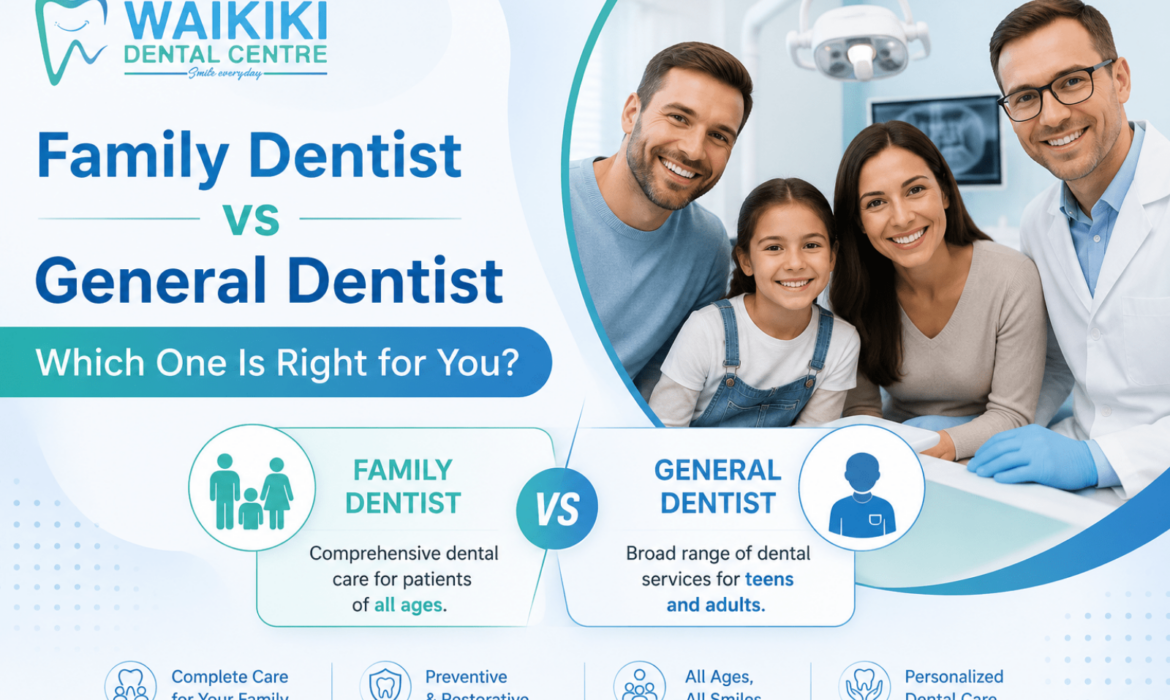
Family Dentist vs General Dentist: What’s the Difference and Which One Is Right for You?
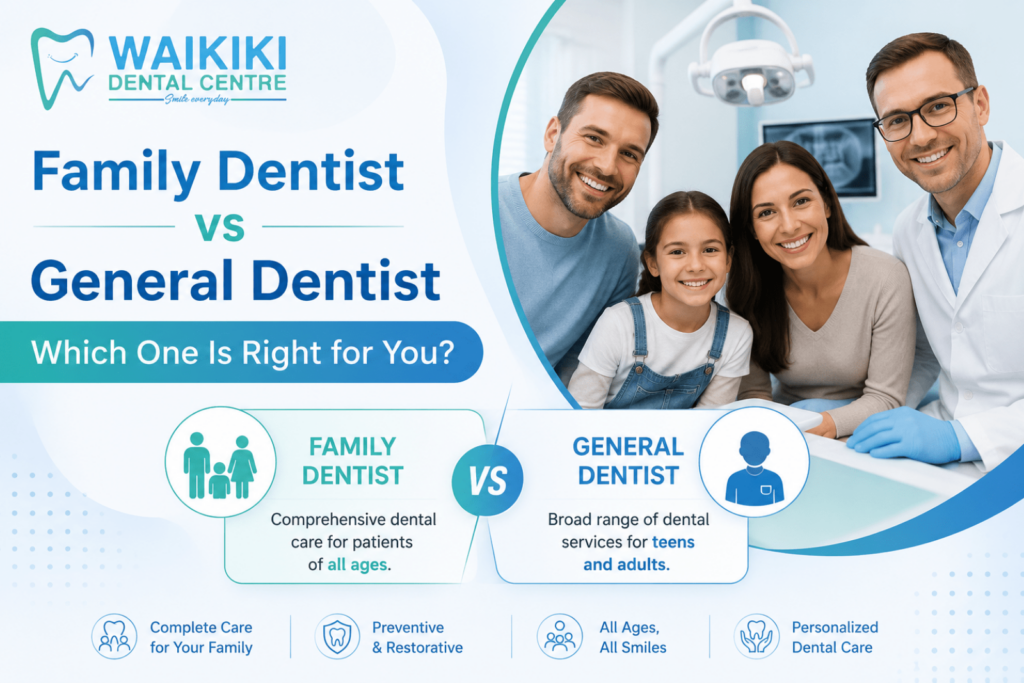
Choosing the right dentist is one of the most important decisions you can make for your family’s long-term oral health. Whether you need regular dental checkups, preventive care, cosmetic treatments, or restorative procedures, selecting the right dental professional can make every visit more comfortable and effective.
Many people searching for a family dentist in Rockingham often wonder whether they should visit a family dentist or a general dentist. While both professionals are highly trained to care for your teeth and gums, they differ in the way they provide care and the range of patients they typically treat.
Understanding these differences will help you choose the dental practice that best fits your lifestyle, your family’s needs, and your future oral health goals.
In this guide, we’ll explain what family dentists and general dentists do, compare their services, and help you determine which option is right for you.
Understanding a Family Dentist
A family dentist provides comprehensive dental care for patients of nearly every age, from young children to seniors. Instead of visiting different dental clinics for each family member, everyone can receive personalized care under one roof.
A trusted family dentist in Rockingham focuses on preventive, restorative, and cosmetic dentistry while building long-term relationships with patients throughout every stage of life. Because they treat multiple generations within the same family, they become familiar with each person’s dental history, making it easier to detect changes early and recommend appropriate treatments.
Family dentistry is designed around convenience, continuity of care, and preventive treatment. Children become comfortable visiting the same dental office where their parents receive treatment, helping reduce dental anxiety and encouraging healthy oral habits from an early age.
Many families appreciate having a single dental provider who understands their unique oral health needs and can coordinate appointments for everyone, saving both time and effort.
What Does a General Dentist Do?
A general dentist is a primary dental care provider who diagnoses, treats, and helps prevent common oral health problems. They offer a wide variety of services that help patients maintain healthy teeth and gums throughout adulthood.
General dentists commonly provide:
- Comprehensive dental examinations
- Professional dental cleanings
- Digital X-rays
- Tooth-colored fillings
- Root canal therapy
- Gum disease treatment
- Dental crowns
- Bridges
- Tooth extractions
- Preventive education
While many general dentists also treat children, some practices mainly focus on adults and may refer younger patients or complex pediatric cases to specialists.
Their primary goal is maintaining oral health by diagnosing dental problems early and providing timely treatment before conditions become more serious.
Family Dentist vs General Dentist: Understanding the Difference
Although both professionals have similar dental education and can perform many of the same procedures, there are several important differences that patients should consider.
1. Age Range of Patients
One of the biggest differences is the age groups they treat. A family dentist welcomes infants, children, teenagers, adults, and seniors. This means every member of your household can receive care from the same dental team throughout life.
General dentists often treat adults and older teenagers, although many also accept children depending on the practice.
If you have children and prefer everyone to visit the same dental office, Rockingham family dentistry offers a practical and convenient solution.
2. Continuity of Care
Family dentists build relationships that may last for decades. As children grow, their dental needs naturally change. A family dentist follows their oral development from baby teeth through adulthood, allowing them to identify concerns early and provide personalized preventive care.
Having complete dental records for the entire family also allows the dentist to monitor hereditary dental conditions and recommend appropriate treatments when necessary.
General dentists also provide ongoing care but may primarily focus on individual adult patients rather than treating multiple generations.
3. Convenience for Busy Families
Today’s families have busy schedules filled with work, school, sports, and activities. Visiting multiple dental offices for different family members can quickly become stressful.
Choosing a family dentist in Rockingham allows parents and children to schedule appointments together, reducing travel time and making dental visits much easier to manage.
Many family dental clinics also offer flexible appointment scheduling designed specifically for busy households.
4. Comfort for Children
Children often feel nervous during their first dental visits.
Family dentists create welcoming environments where young patients can gradually become familiar with the dental team. Seeing parents receive treatment often helps children feel more relaxed and confident.
Building trust from an early age encourages children to maintain lifelong healthy dental habits and reduces dental anxiety in the future.
5. Long-Term Preventive Care
Family dentists emphasize prevention throughout every stage of life.
Preventive care includes:
- Regular examinations
- Professional cleanings
- Fluoride treatments
- Dental sealants
- Oral hygiene education
- Gum disease prevention
- Early cavity detection
Preventive dentistry helps minimize future dental problems while reducing the need for more extensive and expensive treatments.
Services You Can Expect from Rockingham Family Dentistry
Modern Rockingham family dentistry practices provide much more than routine checkups. They offer comprehensive treatments designed to meet changing oral health needs throughout every stage of life.
1. Preventive Dentistry
Preventive dental care forms the foundation of lifelong oral health. Regular dental examinations allow your dentist to detect cavities, gum disease, enamel wear, and other issues before they become serious.
Professional cleanings remove plaque and tartar that brushing and flossing cannot eliminate, helping reduce the risk of tooth decay and periodontal disease.
Preventive care often includes:
- Comprehensive oral examinations
- Scale and clean appointments
- Digital X-rays
- Fluoride applications
- Oral cancer screenings
- Personalized oral hygiene advice
- Gum health assessments
Maintaining regular preventive visits helps preserve your natural teeth while supporting your overall health.
2. Restorative Dentistry
Despite good oral hygiene, dental problems can still occur due to accidents, aging, or natural wear.
Family dentists provide restorative treatments that repair damaged teeth, restore function, and improve comfort.
Common restorative services include:
- Tooth-colored fillings
- Dental crowns
- Bridges
- Dentures
- Root canal treatment
- Tooth extractions
These procedures help patients regain healthy smiles while preventing additional complications.
3. Cosmetic Dentistry
A healthy smile is important, but many patients also want a brighter, more attractive appearance.
One of the most popular cosmetic treatments today is teeth whitening. Rockingham patients choose to remove stains caused by coffee, tea, wine, smoking, and aging.
Professional whitening provides significantly better results than many over-the-counter products while protecting your enamel.
A customized teeth whitening treatment in Rockingham dental professionals provide is carefully designed to deliver even whitening with minimal sensitivity.
Visiting an experienced teeth whitening dentist Rockingham patients trust ensures the treatment is performed safely using professional-strength whitening products that produce long-lasting results.
Professional cosmetic dentistry can dramatically improve smile confidence while maintaining healthy teeth and gums.
4. Children’s Dentistry
Family dentists understand the unique needs of young patients. Children require gentle dental care that supports healthy growth and development while making every visit positive and educational.
Pediatric dental services often include:
- First dental visits
- Routine checkups
- Gentle cleanings
- Fluoride treatments
- Dental sealants
- Cavity prevention
- Monitoring jaw and tooth development
- Oral hygiene education for parents and children
Early dental care establishes healthy habits that benefit children throughout adulthood.
5. Emergency Dental Care
Dental emergencies rarely happen at convenient times.
Family dentists can often provide prompt treatment for issues such as:
- Toothaches
- Broken teeth
- Lost fillings
- Dental infections
- Knocked-out teeth
- Swollen gums
- Dental trauma
Receiving immediate treatment helps relieve pain and prevent more serious complications.
Which One Is Right for You?
Choosing between a family dentist and a general dentist ultimately depends on your individual needs, your household, and your long-term oral health goals. While both are qualified to provide excellent dental care, the right choice often comes down to convenience, continuity of care, and the type of relationship you want with your dental provider.
If you’re a single adult looking for routine checkups and occasional treatments, a general dentist may meet your needs. However, if you have children, are planning to start a family, or simply prefer receiving all your dental care in one place, a family dentist is often the more practical option.
A family dentist in Rockingham provides care for every stage of life, allowing your entire family to visit the same trusted dental practice. This continuity helps build confidence, reduces dental anxiety, and ensures that every family member receives personalized care based on their dental history.
When your dentist understands your family’s oral health over many years, they can identify changes earlier, recommend preventive treatments, and provide consistent advice tailored to your needs.
Benefits of Choosing a Family Dentist
Selecting a family dentist offers advantages that go beyond convenience. It creates a long-term partnership focused on maintaining healthy smiles for every member of your household.
1. Comprehensive Care for Every Age
One of the biggest advantages of Rockingham family dentistry is that it provides care for patients throughout every stage of life.
From a child’s first dental visit to orthodontic assessments, adult restorative care, cosmetic treatments, and senior dental services, everything is available under one roof.
This eliminates the need to search for a new dentist as your family’s needs evolve.
2. Long-Term Relationships Build Better Care
Seeing the same dentist consistently allows them to become familiar with your oral health history, lifestyle, and treatment preferences.
Over time, this relationship helps your dentist:
- Monitor changes in your oral health
- Detect potential issues earlier
- Track previous treatments
- Recommend preventive care
- Develop personalized treatment plans
- Understand hereditary dental concerns within your family
This continuity often leads to better long-term oral health outcomes.
3. Convenient Scheduling
Busy families often struggle to coordinate multiple appointments at different clinics.
A family dental practice can often arrange appointments for parents and children on the same day, reducing travel time and minimizing disruptions to work and school schedules.
Instead of visiting several offices, your entire family can receive quality dental care during one visit.
4. Early Prevention Saves Time and Money
Preventive dentistry is one of the greatest strengths of family dental care. Routine examinations allow small problems to be treated before they become painful or expensive.
Preventive care can help reduce the risk of:
- Tooth decay
- Gum disease
- Tooth loss
- Dental infections
- Costly restorative procedures
- Emergency dental visits
Regular professional cleanings, fluoride treatments, and oral hygiene education support healthier smiles while helping families avoid unnecessary dental expenses.
Cosmetic Dentistry Is Part of Complete Dental Care
Many people think cosmetic dentistry is only about improving appearance, but it can also increase confidence and encourage better oral hygiene.
Among the most requested cosmetic procedures is teeth whitening; Rockingham patients choose to brighten stained or discoloured teeth.
Professional whitening can remove stains caused by coffee, tea, red wine, tobacco, and natural ageing, helping patients achieve a fresher, healthier-looking smile.
Unlike over-the-counter products, the professional teeth whitening treatment provided by Rockingham dental clinics is customised to your smile. Your dentist carefully evaluates your oral health before treatment, ensuring safe and even whitening while minimising tooth sensitivity.
Visiting an experienced teeth-whitening dentist that Rockingham residents trust also means you receive expert guidance on maintaining your results through proper oral hygiene and dietary habits.
Whether you’re preparing for a wedding, job interview, graduation, or simply want to feel more confident every day, professional teeth whitening is a safe and effective way to enhance your smile.
Quality Dental Care Doesn’t Have to Be Expensive
Many people postpone dental visits because they worry about treatment costs. Unfortunately, delaying care often allows minor problems to become more serious, leading to more complex and expensive procedures.
Choosing an affordable dentist in Rockingham families trust allows you to prioritise preventive care without compromising on quality. Regular check-ups, cleanings, and early treatment are typically far more cost-effective than waiting until pain or significant damage occurs.
Many family dental practices also offer flexible treatment plans, transparent pricing, and a wide range of services to suit different budgets. Investing in routine dental care today can help reduce future expenses while protecting your long-term oral health.
How to Choose the Right Family Dentist
Finding the right dental practice involves more than simply selecting the closest clinic. Consider the following factors when making your decision:
1. Experience Treating All Ages
Choose a dentist who is comfortable caring for children, teenagers, adults, and seniors. This ensures every family member receives age-appropriate treatment in a familiar environment.
2. Comprehensive Services
Look for a practice that offers preventive, restorative, emergency, and cosmetic dentistry. Having multiple services available in one location makes dental care more convenient.
3. Patient-Focused Approach
A welcoming and compassionate dental team can make a significant difference, particularly for children or patients with dental anxiety. Clear communication, personalised treatment plans, and a gentle approach help create a positive experience.
4. Modern Technology
Clinics equipped with digital X-rays, advanced diagnostic tools, and contemporary treatment techniques often provide more accurate diagnoses, improved comfort, and efficient care.
5. Positive Reputation
Reading patient reviews and testimonials can give you valuable insight into the quality of care, professionalism, and overall patient experience offered by the practice.
Why More Families Choose Rockingham Family Dentistry
Families appreciate having one trusted dental team that understands their unique oral health needs over time.
A family dental practice focuses on building lasting relationships while providing comprehensive care in a welcoming environment. Children become familiar with regular dental visits, adults benefit from preventive and restorative care, and seniors receive ongoing support to maintain healthy smiles.
Whether you need routine examinations, fillings, gum care, cosmetic improvements, or professional whitening, receiving treatment from a trusted family dentist offers consistency, convenience, and peace of mind.
By choosing a practice that supports every stage of life, you’re making an investment in your family’s long-term oral health.
Conclusion
Both family dentists and general dentists play an essential role in helping patients maintain healthy smiles. However, if you’re looking for comprehensive care that grows with your family, a family dentist offers unique advantages in convenience, continuity, and personalised treatment.
From children’s first dental visits to preventive care, restorative procedures, emergency treatment, and cosmetic services like professional teeth whitening, a family dental practice can meet the evolving needs of every member of your household.
Choosing a trusted family dentist in Rockingham means you’ll have a dedicated dental team focused on protecting your family’s oral health today and for years to come.
Schedule Your Family’s Dental Visit Today
Looking for compassionate, comprehensive dental care for every member of your family? At Waikiki Dental, our experienced team is committed to providing high-quality preventive, restorative, and cosmetic dentistry in a comfortable and welcoming environment.
Whether you need routine check-ups, children’s dental care, professional teeth whitening treatment in Rockingham, or are searching for an affordable dentist in Rockingham, we’re here to help you achieve healthy, confident smiles that last a lifetime.
Book your appointment today and discover why so many families trust Waikiki Dental for exceptional dental care.
Frequently Asked Questions (FAQs)
1. What is the difference between a family dentist and a general dentist?
A family dentist treats patients of all ages, from young children to seniors, while a general dentist may primarily focus on adult dental care. Family dentists offer comprehensive services for the entire household, making it easier to manage everyone’s oral health at one practice.
2. Why should I choose a family dentist in Rockingham?
Choosing a family dentist in Rockingham allows every member of your family to receive consistent, personalised care in one convenient location. It also helps build long-term relationships with your dental team, making preventive care more effective and reducing dental anxiety for children.
3. Can a family dentist provide cosmetic treatments like teeth whitening?
Yes. Many family dental practices offer cosmetic services, including professional teeth whitening that Rockingham patients choose to brighten stained or discoloured teeth. Your dentist will recommend the most suitable whitening option based on your oral health and smile goals.
4. How often should my family visit the dentist?
Most patients benefit from dental check-ups and professional cleanings every six months. However, your dentist may recommend more frequent visits if you have gum disease, ongoing dental concerns, or specific oral health needs.
5. Is professional teeth whitening better than store-bought products?
Yes. A professional teeth whitening dentist Rockingham patients trust uses stronger, clinically approved whitening agents that provide faster, safer, and more consistent results than many over-the-counter products. Professional treatment is also customised to minimise sensitivity while achieving a brighter smile.