
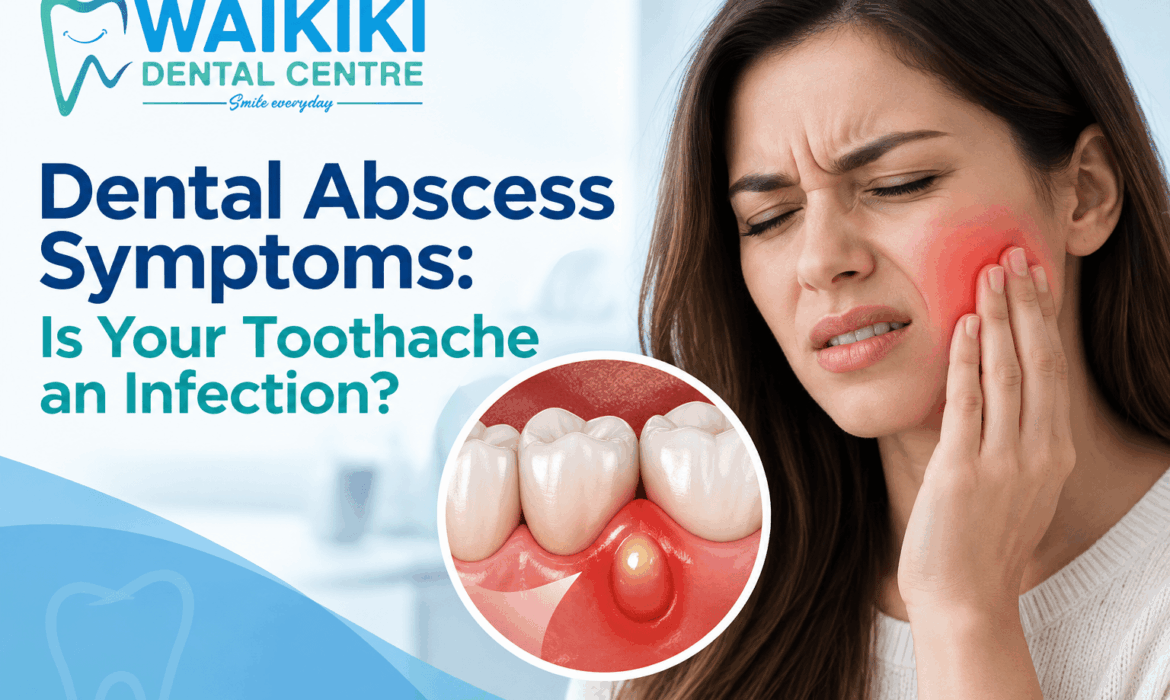
A toothache can be caused by several dental problems, but persistent or worsening pain may sometimes be a sign of an infection. Recognizing common dental abscess symptoms can help you seek treatment before the infection becomes more serious.
A dental abscess may cause severe tooth pain, swelling, sensitivity, a bad taste, or discomfort when chewing. In some cases, it can also lead to fever or facial swelling. Understanding the connection between tooth pain and infection can help you know when it is time to contact a dentist.
This guide explains the signs of a dental abscess, common causes, treatment options, and when to seek urgent dental care from Waikiki Dental.
What is a Dental Abscess?
A Professional Tooth Abscess Treatment is a localized collection of pus that develops when bacteria infect the tooth, gums, or tissues surrounding the tooth. The infection can occur when bacteria gain access to the inner part of a tooth through untreated decay, a crack, trauma, or other damage.
Two common types are periapical abscesses and periodontal abscesses.
A periapical abscess develops around the tip of a tooth’s root. It commonly occurs when bacteria reach the pulp, the soft tissue containing nerves and blood vessels inside the tooth. Deep decay or significant damage can allow bacteria to reach this area.
A periodontal abscess develops in the gum and supporting tissues surrounding a tooth. It may be associated with gum disease, a deep periodontal pocket, or bacteria becoming trapped around the tooth.
An untreated abscess can continue to affect surrounding tissues. The infection may cause increasing swelling and pain and, in more serious circumstances, can spread beyond the immediate area. For this reason, suspected infection should be professionally assessed rather than monitored indefinitely at home.
Common Dental Abscess Symptoms to Watch For
Recognizing the common warning signs can help us distinguish a potentially infected tooth from ordinary temporary sensitivity. Dental abscess symptoms can vary depending on the location and severity of the infection, but several signs deserve prompt attention.
1. Persistent or Severe Toothache
A toothache that continues rather than settling can indicate inflammation or infection. Pain may become increasingly uncomfortable and interfere with eating, sleeping, or normal daily activities.
2. Throbbing Tooth Pain
An infected tooth may cause a deep, throbbing sensation. The discomfort can sometimes feel stronger when lying down or when pressure is placed on the affected tooth.
3. Sensitivity to Hot or Cold
Sensitivity can occur for several reasons, including enamel wear, exposed dentine, decay, or inflammation of the dental pulp. When sensitivity becomes prolonged or occurs alongside other symptoms, an examination can help identify the underlying cause.
4. Pain When Biting or Chewing
Pain when biting down may occur when inflammation affects the tissues surrounding a tooth. It can also result from a cracked tooth or other dental conditions, so professional diagnosis is important.
5. Swollen Gums
Localized gum swelling near a painful tooth can be an important warning sign. The area may appear red, tender, or noticeably different from the surrounding gum tissue.
6. Facial or Jaw Swelling
Swelling around the cheek, jaw, or face can occur when an infection extends beyond the immediate tooth area. Increasing facial swelling requires prompt dental assessment.
7. A Pimple or Bump on the Gums
A small bump resembling a pimple may develop on the gum when an infection creates a pathway for drainage. Although pressure may temporarily decrease after drainage, this does not necessarily mean the underlying infection has disappeared.
8. Bad Taste or Pus in the Mouth
A sudden unpleasant taste, particularly when accompanied by fluid or pus around the affected tooth, can indicate an infection. This symptom should not be ignored even if the pain temporarily improves.
9. Fever or Feeling Generally Unwell
Fever, fatigue, or feeling unwell may indicate that the body is responding to infection. These symptoms are particularly important when they occur with significant dental pain or swelling.
10. Swollen Lymph Nodes
Infections in the mouth can sometimes cause nearby lymph nodes to become tender or swollen. This can occur alongside other signs of infection and warrants professional evaluation.
How Can You Tell If a Toothache Is an Infection?
Not every toothache is caused by an infection. Temporary sensitivity may occur after consuming something particularly hot or cold and may disappear quickly. However, persistent pain, increasing discomfort, swelling, or pain that occurs without an obvious trigger may require closer attention.
Tooth pain and infection are more concerning when several symptoms appear together. For example, tooth pain accompanied by facial swelling, a gum bump, pus, fever, or a bad taste is more suggestive of an infection than isolated sensitivity.
Pain that becomes progressively worse or continues for an extended period should also be assessed. However, symptoms alone cannot establish a definitive diagnosis. A dentist may examine the tooth, gums, bite, and surrounding tissues and may use dental imaging when necessary.
What Causes a Dental Abscess?
A dental abscess usually develops when bacteria gain access to tissues where they can multiply and cause infection. Several dental problems can create this opportunity.
1. Untreated Tooth Decay
Deep tooth decay can progress through the enamel and dentine until it reaches the pulp. Once bacteria enter the inner tissues, inflammation and infection can develop.
2. Cracked or Damaged Teeth
A crack can create a pathway for bacteria to enter deeper areas of a tooth. Depending on the location and extent of the damage, the tooth may become painful or infected.
3. Dental Trauma
An injury can damage the tooth’s internal tissues even when the outside of the tooth does not appear severely damaged. Dental trauma may eventually contribute to pulp problems and infection.
4. Gum Disease
Advanced gum disease can create deeper spaces around teeth where bacteria accumulate. A periodontal infection can sometimes result in an abscess within these supporting tissues.
5. Previous Dental Treatment Complications
A previously treated tooth can occasionally develop further problems. A dentist may need to investigate the tooth and surrounding tissues to determine why symptoms have returned.
6. Bacteria Entering the Tooth’s Inner Tissues
When the protective outer layers of a tooth are compromised, bacteria may reach the pulp. If the infection progresses, an abscess can form around the root or surrounding tissues.
Can a Dental Abscess Go Away on Its Own?
A dental abscess should not be considered cured simply because the pain becomes less intense. In some cases, an abscess can drain, reducing pressure and creating temporary relief. The source of the infection, however, may remain.
Without appropriate treatment, infection can continue affecting the tooth and surrounding tissues. Delaying care may also make the dental problem more complicated to manage.
Professional tooth infection treatment focuses on addressing the source of the infection. Depending on the circumstances, this may involve drainage, root canal treatment, extraction, or other dental care.
Antibiotics may be prescribed in certain situations, particularly when there are signs that infection is spreading or systemic involvement is present. However, antibiotics do not generally eliminate the source of an infected tooth by themselves. The underlying dental problem still needs appropriate treatment.
How is a Dental Abscess Treated?
The appropriate dental abscess treatment depends on the location of the infection, the condition of the tooth, and the extent of the problem. A dentist will assess the tooth and surrounding tissues before recommending treatment.
1. Draining the Abscess
When appropriate, drainage can help remove accumulated pus and reduce pressure. The dentist determines the safest method based on the location of the infection.
2. Root Canal Treatment
When an infected tooth can be restored, root canal treatment may be used to remove infected or damaged pulp tissue. The canals are then cleaned, disinfected, and sealed before the tooth is restored.
3. Tooth Extraction
If a tooth is severely damaged or cannot be predictably restored, tooth extraction may be necessary. Removing the affected tooth eliminates the source when preservation is not possible.
4. Antibiotics When Clinically Appropriate
Antibiotics may form part of treatment when clinically indicated. They are generally used alongside appropriate dental treatment rather than as a replacement for addressing the infected tooth or tissues.
5. Follow-Up Dental Care
Follow-up is important to confirm that treatment has addressed the underlying problem. Depending on the treatment provided, further restoration or ongoing dental care may be required.
When Should You See an Emergency Dentist?
Some symptoms require urgent professional attention. We should seek Emergency Dental Care when dental pain is accompanied by significant swelling, systemic symptoms, or signs that the infection may be spreading.
An emergency dentist should assess situations involving:
- Rapidly increasing facial or oral swelling
- Severe or worsening tooth pain
- Fever associated with dental symptoms
- Difficulty swallowing
- Difficulty breathing
- Swelling extending toward the face or neck
- Severe pain that cannot be adequately controlled
Difficulty breathing or swallowing, particularly when accompanied by significant swelling, can indicate a potentially serious situation requiring immediate medical attention.
What Can You Do Until You See a Dentist?
While home measures cannot eliminate the source of a dental abscess, several steps may provide temporary support while waiting for professional care.
- Keep the mouth and affected area clean through gentle oral hygiene.
- Rinse gently with warm salt water if comfortable.
- Avoid very hot, cold, or sugary foods if they trigger pain.
- Follow the directions for appropriate over-the-counter pain relief and avoid exceeding recommended doses.
- Do not attempt to squeeze, puncture, or drain an abscess yourself.
- Arrange professional dental care as soon as possible.
A temporary reduction in pain should not be interpreted as confirmation that the infection has resolved. Professional assessment remains important when an abscess is suspected.
Get Professional Dental Abscess Treatment at Waikiki Dental
Persistent tooth pain, swelling, gum changes, pus, a bad taste, fever, and increasing sensitivity can be important dental abscess symptoms that should not be ignored. Although some toothaches have less serious causes, symptoms associated with infection require professional assessment.
Prompt dental abscess treatment can address the underlying source of infection and may help preserve a natural tooth when appropriate. Depending on the condition, treatment may include drainage, root canal treatment, restoration, extraction, or antibiotics when clinically indicated. Patients looking for Tooth Abscess Treatment in Waikiki or Rockingham can arrange a professional dental assessment to determine the cause of their symptoms and discuss suitable treatment options.
For severe symptoms or signs of spreading infection, Emergency Dental Care should be sought without unnecessary delay.
Contact Waikiki Dental to arrange an appointment or seek urgent dental care when symptoms require prompt attention.
Frequently Asked Questions About Dental Abscesses
What are the first signs of a dental abscess?
Early signs can include persistent tooth pain, sensitivity, pain when biting, localized gum swelling, tenderness, or a pimple-like bump on the gum. A bad taste or drainage may also occur. Symptoms vary depending on the location and extent of infection.
Can a tooth abscess cause severe tooth pain?
Yes. A dental abscess can cause severe, persistent, or throbbing pain. The discomfort may become more noticeable when biting or chewing. However, the severity of pain does not always indicate the extent of infection, so dental assessment is important.
Can a dental abscess spread to other parts of the body?
An untreated dental infection can spread beyond the original tooth and surrounding tissues. Significant swelling, fever, difficulty swallowing, or difficulty breathing can indicate a more serious infection and require urgent professional assessment.
Does every dental abscess require tooth extraction?
No. Extraction is not automatically required. When a tooth has sufficient healthy structure and can be restored, root canal treatment may allow the natural tooth to be retained. The appropriate option depends on the condition of the tooth and surrounding tissues.
How is a dental abscess diagnosed?
A dentist generally evaluates the symptoms, examines the tooth and surrounding tissues, and assesses tenderness or changes around the affected area. Dental X-rays or other imaging may be used when necessary to identify the source and extent of the problem.
Can antibiotics cure a tooth abscess?
Antibiotics can be appropriate in certain situations, particularly when there are signs of spreading infection or systemic involvement. However, they do not usually remove the underlying source of an infected tooth. Dental treatment may still be necessary.
When should I visit an emergency dentist for tooth pain?
Urgent assessment is appropriate when tooth pain is severe or worsening, particularly when accompanied by swelling or fever. Difficulty swallowing or breathing and swelling involving the face or neck require particularly urgent attention.
How quickly should a dental abscess be treated?
A suspected dental abscess should be assessed promptly rather than left untreated. Early professional evaluation allows the underlying cause to be identified and appropriate Tooth Abscess Treatment to be planned.