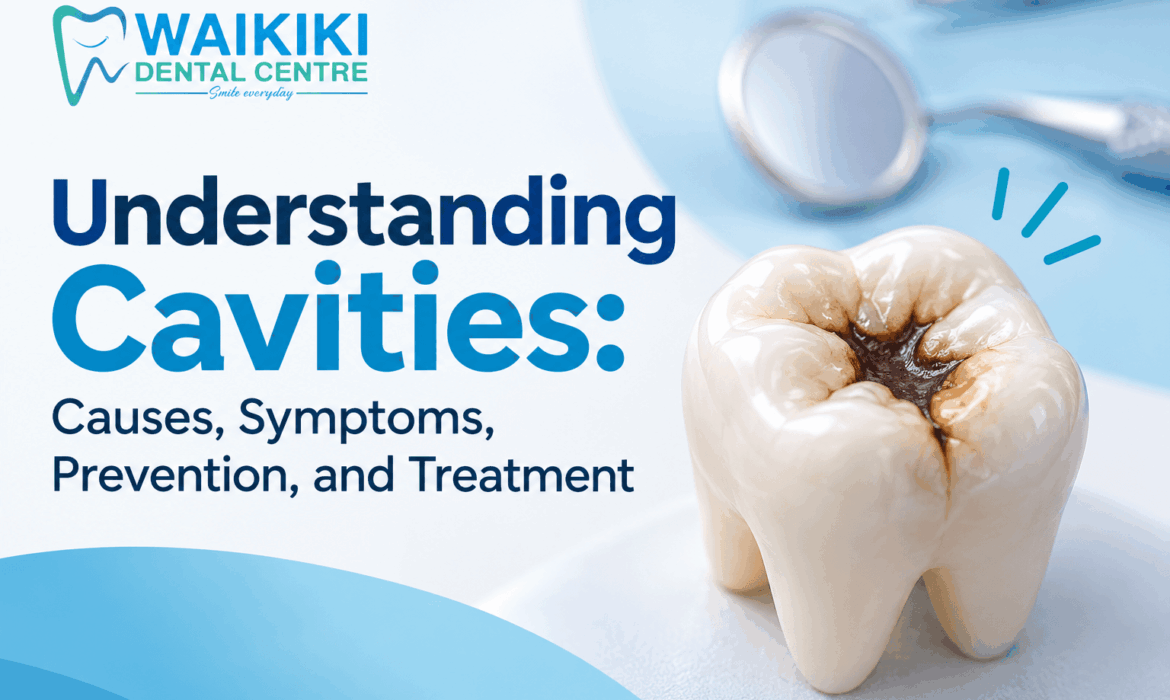
Cavities are among the most common oral health problems affecting both children and adults. A cavity forms when acids produced by bacteria gradually weaken and damage the tooth’s protective enamel. Without timely care, this process can move deeper into the tooth, causing sensitivity, persistent pain, infection, and potentially tooth loss.
We can often prevent extensive tooth damage when we identify decay early. Regular brushing, daily cleaning between the teeth, a balanced diet, fluoride exposure, and routine dental examinations all play important roles in protecting teeth. At Waikiki Dental Centre, we provide comprehensive dental care focused on prevention, early diagnosis, and appropriate treatment to help patients maintain healthy smiles.
What Are Cavities?
A cavity is a permanently damaged area of a tooth where decay has caused the enamel or deeper tooth structure to break down. Cavities form as part of the tooth decay process, which begins when bacteria in dental plaque interact with sugars and starches from food and drinks.
Plaque is a sticky film that continuously forms on teeth. When oral bacteria consume fermentable carbohydrates, they produce acids. Repeated acid attacks can remove minerals from enamel, a process called demineralization. If mineral loss continues without adequate repair, the enamel can weaken and eventually form a physical cavity.
The terms cavities, tooth decay, and dental decay are often used interchangeably, although they describe slightly different aspects of the same problem. Tooth decay refers broadly to the disease process that damages tooth structure, while a cavity is the actual hole or damaged area that can form as decay progresses. A cavity in a tooth can occur anywhere decay has successfully broken down the tooth structure.
Cavities can affect primary teeth as well as permanent teeth. Children are particularly vulnerable when brushing habits are still forming, while adults remain at risk throughout life.
How Do Tooth Cavities Form?
The formation of a cavity generally occurs through several connected stages:
- Plaque formation: Bacteria and food debris collect on tooth surfaces and form plaque.
- Bacterial activity: Oral bacteria feed on sugars and starches left in the mouth.
- Acid production: Bacteria produce acids that attack tooth enamel.
- Enamel weakening: Repeated acid exposure removes minerals from enamel.
- Cavity formation: Continued mineral loss can create a weakened area that eventually forms into a cavity.
The longer plaque remains on the teeth, the greater the opportunity for harmful acids to affect vulnerable areas.
What Causes Cavities?
Several factors can contribute to cavities, and decay often forms because multiple risk factors occur together.
1. Poor Oral Hygiene
Inadequate brushing and flossing allow plaque to accumulate around teeth and along the gumline. Areas that are difficult to reach, such as between teeth and around dental restorations, can be particularly susceptible to plaque buildup.
Brushing twice a day with fluoride toothpaste and cleaning between the teeth every day helps remove plaque before it can contribute to prolonged acid exposure.
2. Sugary and Acidic Foods and Drinks
Frequent consumption of candy, desserts, soft drinks, sports drinks, energy drinks, and other sugary products can increase the amount of fermentable carbohydrate available to oral bacteria.
Frequency matters as well as quantity. Repeatedly sipping or snacking on sugary products throughout the day can expose teeth to acid attacks more often. Acidic beverages can also contribute directly to enamel erosion, making teeth more vulnerable to damage.
3. Dry Mouth
Saliva is one of the mouth’s natural protective mechanisms. It helps wash away food particles, neutralize acids, and provide minerals that support enamel repair.
Reduced saliva production can therefore increase cavity risk. Dry mouth may be associated with certain medications, dehydration, medical conditions, or other factors. Patients experiencing persistent dry mouth should discuss it with a dental professional.
4. Bacteria and Plaque
Oral bacteria are central to the tooth decay process. When plaque remains on teeth, bacteria metabolize sugars and starches and produce acids. Regular oral hygiene reduces plaque and helps interrupt this cycle.
5. Other Risk Factors
Other factors that can increase cavity risk include:
- Deep grooves and pits in teeth
- Gum recession that exposes tooth roots
- Certain medications that contribute to dry mouth
- Existing fillings or other dental work where plaque can accumulate
- Age-related changes affecting oral hygiene, saliva, or exposed tooth surfaces
- Limited fluoride exposure
- Frequent consumption of sugary foods and beverages
Understanding individual risk factors allows us to recommend more targeted preventive care.
Common Cavity Symptoms and Signs
Early cavities may not cause noticeable symptoms. A person can have tooth decay without experiencing pain, which is one reason routine dental examinations are important.
Common Signs of Cavities
As decay progresses, symptoms may include:
- Tooth sensitivity
- Toothache or persistent pain
- Sensitivity to hot or cold foods and drinks
- Pain when eating sweets
- White, brown, or black discoloration
- Visible holes or pits
- Food repeatedly becoming trapped around a particular tooth
- Bad breath or an unpleasant taste
Symptoms vary depending on the location and depth of the decay.
When Should You See a Dentist?
We recommend professional dental care when tooth pain or sensitivity persists, particularly if symptoms are becoming worse. Visible damage, swelling, signs of infection, or pain that interferes with eating or sleeping should not be ignored.
Prompt treatment can prevent a relatively small cavity from progressing into deeper and more complex tooth damage.
Stages of Tooth Decay
Understanding the stages of decay helps explain why early treatment matters.
Stage 1 – Enamel Demineralization
The earliest stage involves mineral loss from enamel. White spots may appear as the enamel begins to weaken. At this stage, the tooth may still be able to benefit from fluoride and improved oral hygiene.
Stage 2 – Enamel Cavity
If demineralization continues, the enamel can break down and form a cavity. Once a physical hole has developed, professional treatment is generally required to restore the damaged structure.
Stage 3 – Dentin Decay
When decay passes through enamel and reaches dentin, sensitivity can become more noticeable. Dentin is softer and less resistant to decay, allowing the damage to progress more rapidly.
Stage 4 – Pulp Damage
Advanced decay can reach the dental pulp, which contains nerves and blood vessels. This can cause severe or persistent pain and may lead to infection inside the tooth.
Stage 5 – Dental Abscess
An untreated infection can form into a dental abscess around the tooth. Swelling, significant pain, fever, or a bad taste may occur. A dental infection requires prompt professional attention.
How Are Cavities Diagnosed?
We diagnose cavities through a combination of clinical examination and, when appropriate, dental X-rays. During an examination, we inspect tooth surfaces for discoloration, visible damage, pits, and other signs of decay.
We may also assess areas that feel softened or structurally compromised. X-rays can help identify decay that is hidden between teeth or beneath surfaces that cannot be fully evaluated visually.
Routine examinations are valuable because cavities can often be detected before significant pain forms.
Cavity Treatment Options
Treatment depends on the cavity’s size, location, depth, and overall condition of the tooth.
1. Fluoride Treatment for Early Decay
Early mineral loss may sometimes be managed with fluoride and improved preventive care. Fluoride helps strengthen enamel and can support the remineralization process before a physical cavity forms.
Early detection is therefore particularly important.
2. Dental Fillings
When decay has created a cavity, a dental filling can remove the damaged portion and restore the tooth’s shape and function. Depending on individual circumstances, fillings may be made from materials such as tooth-colored composite resin, amalgam, ceramic, or other restorative materials.
3. Dental Crowns
When decay or structural damage is extensive, a filling may not provide enough support. Dental crown treatment involves placing a custom restoration over the remaining tooth structure to restore function and provide additional protection.
4. Root Canal Treatment
If decay reaches the pulp and causes irreversible inflammation or infection, Root Canal Treatment may be recommended. The infected or damaged pulp is removed, the internal space is cleaned and sealed, and the tooth is subsequently restored.
5. Tooth Extraction
When a tooth is severely damaged and cannot be predictably restored, Tooth Extraction Treatment may be necessary. Following extraction, we can discuss appropriate replacement options based on the patient’s oral health and individual needs.
How to Prevent Cavities and Tooth Decay
Effective cavity prevention combines daily habits with professional dental care.
1. Brush Your Teeth Twice a Day
We recommend brushing twice daily using fluoride toothpaste. Brush for approximately two minutes, paying attention to every tooth surface and the gumline.
2. Floss or Clean Between Your Teeth Daily
A toothbrush cannot effectively clean every area between teeth. Daily flossing or another appropriate interdental cleaning method helps remove plaque and food particles from these hard-to-reach areas.
3. Limit Sugar and Frequent Snacking
Reducing sugary foods and drinks can lower the frequency of acid attacks on teeth. Choose balanced, tooth-friendly snacks and avoid repeatedly consuming sugary products throughout the day.
4. Drink Plenty of Water
Water can help rinse food particles from the mouth and support normal saliva function. Choosing water instead of sugary beverages can also reduce exposure to cavity-promoting sugars.
5. Schedule Regular Dental Checkups
Routine visits allow us to monitor oral health, identify early decay, remove plaque and tartar through professional cleaning, and provide personalized preventive recommendations.
6. Consider Fluoride and Sealants When Appropriate
Fluoride treatments may provide additional protection for patients with elevated cavity risk. Dental sealants can protect the grooves and pits of certain teeth by creating a barrier that makes these surfaces easier to keep clean.
When is a Cavity a Dental Emergency?
A cavity becomes particularly concerning when it is associated with severe pain, swelling, infection, or other serious symptoms. Seek prompt dental care for:
- Severe or sudden tooth pain
- Facial or gum swelling
- Signs of a dental infection
- Fever associated with dental symptoms
- A broken tooth accompanied by significant pain
- Difficulty swallowing or breathing
Difficulty breathing or swallowing can indicate a serious infection and requires urgent medical attention. Anyone experiencing severe dental symptoms should seek an Emergency Dentist promptly rather than waiting for the problem to resolve.
Cavities in Children vs. Adults
Children can be vulnerable to cavities because their brushing skills are still forming and sugary snacks or drinks may be common. Parents and caregivers can help by supervising brushing, encouraging fluoride toothpaste, limiting frequent sugary snacks, and arranging regular dental visits.
Baby teeth also require professional care. Although they eventually fall out, untreated decay can cause pain, infection, difficulty eating, and other complications.
Adults remain susceptible to cavities as well. Gum recession can expose root surfaces, existing dental restorations can form vulnerable areas, and dry mouth can increase decay risk. Maintaining consistent preventive habits remains important throughout adulthood.
Interesting Read: 5 Myths About Children’s Oral Health Debunked by a Kids Dentist
Why Regular Dental Visits Matter for Oral Health and Cavities
Regular dental visits help us identify problems while they are still manageable. A family dentist can monitor the oral health of children and adults, while a general dentist can provide examinations, preventive care, fillings, crowns, and other appropriate treatments.
Patients searching for a dentist near me should consider accessibility, preventive care, treatment options, and the practice’s approach to long-term oral health rather than waiting until significant pain occurs.
Professional examinations can help us detect early cavities, provide professional cleaning, monitor existing dental problems, and recommend practical changes to daily oral hygiene.
Interesting Read: Family Dentist vs General Dentist: Which One is Right for You
Get Professional Cavity Care at Waikiki Dental Centre
At Waikiki Dental Centre, we provide comprehensive general and preventive dental care for patients seeking to protect their teeth and maintain long-term oral health. Our approach focuses on identifying dental problems early and providing treatment appropriate to each patient’s needs.
If you are experiencing tooth sensitivity, pain, visible discoloration, food becoming trapped around a tooth, or other possible cavity symptoms, arranging an examination can help determine the underlying cause.
For patients looking for a dentist in Waikiki, or a trusted dental clinic in Waikiki, professional assessment can provide clarity about whether decay is present and which treatment may be appropriate.
Protect Your Smile From Cavities
Preventing cavities starts with consistent daily care, but professional dental examinations are equally important. Good oral hygiene, sensible dietary choices, fluoride, regular cleaning, and early detection can help reduce the risk of advanced tooth decay.
At Waikiki Dental Centre, we help patients identify and address cavities before they progress whenever possible. If you are experiencing sensitivity or tooth pain, notice visible damage, or are due for a dental examination, scheduling an appointment can help protect your teeth and maintain your oral health for years to come.
Frequently Asked Questions About Cavities
What is a cavity in a tooth?
A cavity is a permanently damaged area of a tooth caused by decay. It develops when acids produced by plaque bacteria gradually weaken tooth structure and eventually create a hole or damaged area.
What are the first signs of cavities?
Early cavities may cause no symptoms. Possible early signs include white spots or changes in tooth color. As decay progresses, sensitivity, pain, visible holes, or discomfort when eating sweets may develop.
Can cavities go away on their own?
A developed cavity does not normally heal on its own. Very early enamel demineralization may sometimes be remineralized with fluoride and improved oral hygiene, but an established hole requires professional dental treatment.
How quickly can a cavity form?
The speed of cavity formation varies based on oral hygiene, diet, saliva, fluoride exposure, bacterial activity, tooth anatomy, and individual risk factors. Regular dental examinations help detect changes before they become advanced.
Does a cavity always cause pain?
No. Cavities can exist without pain, particularly during their early stages. Pain often develops when decay becomes deeper and begins affecting dentin or the pulp.
Can tooth decay be reversed?
Very early mineral loss may sometimes be reversed or arrested through fluoride, improved oral hygiene, and dietary changes. Once decay has created a physical cavity, the damaged tooth structure cannot simply grow back.
What is the best cavity treatment?
The best treatment depends on the extent of decay. Early enamel damage may benefit from fluoride, while established cavities may require fillings. More extensive damage may require a crown, root canal treatment, or extraction.
How can I prevent tooth decay?
Brush twice daily with fluoride toothpaste, clean between your teeth every day, limit sugary foods and drinks, drink water, avoid frequent snacking, and maintain regular dental examinations and professional cleanings.
When should I see a dentist for a cavity?
Arrange a dental examination if you notice tooth pain, persistent sensitivity, discoloration, a visible hole, swelling, food trapping, or other changes. Severe pain, swelling, fever, or difficulty swallowing requires prompt attention.
Can cavities affect children and adults?
Yes. Both children and adults can develop cavities. Children may have increased risk because of developing brushing habits and frequent sugary foods, while adults may experience risks related to dry mouth, gum recession, aging, or existing dental work.